The Forgotten Story of Shimagi: How Island Pines Became Bonsai Material
Kurokawa
Attractive Trip in Shikoku
When I take guests through Takamatsu’s bonsai districts, there’s one question I hear more than any other: “How long did this take?”
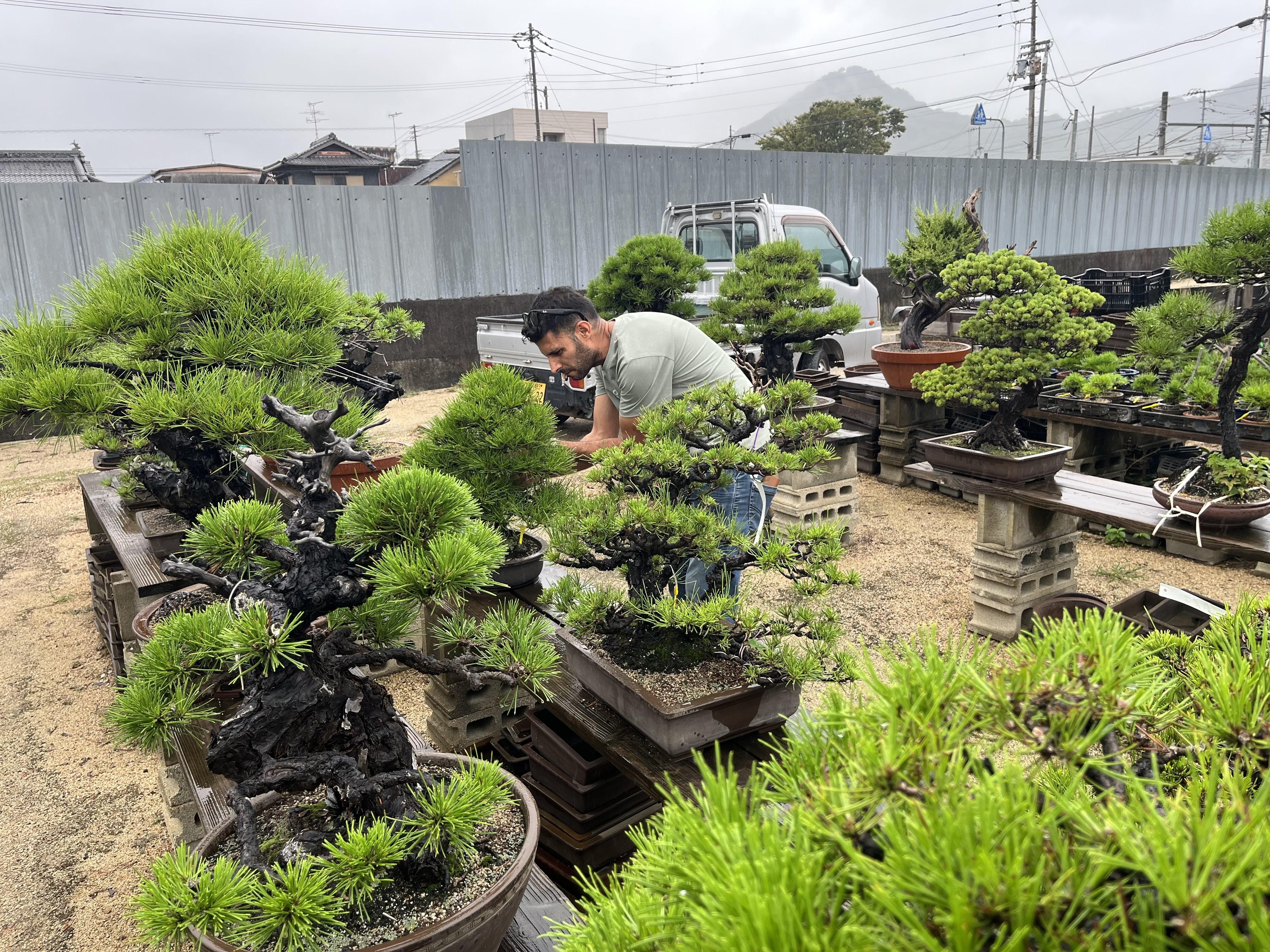
It’s a fair question, and the honest answer is that it depends enormously on the tree, and on what you mean by “making” a bonsai. Growing the initial material can take a few years or several decades. Refining it into a finished bonsai can take much longer. Since I started helping out at Konishi Shorakuen, a nursery in Kinashi, I’ve begun to understand just how much time can be invested in a single tree. Here’s what the growers I’ve worked with have taught me about time.
Not every bonsai takes decades. Mr. Konishi told me about a grower he knows in Tokushima who raises Japanese maples from seed in pots. Maples grow quickly, and according to Mr. Konishi, the seedlings can be grown into saleable bonsai material in as little as two or three years. That doesn’t mean they’re finished bonsai; it means they can be sold for further development and training.
That speed matters more than it might seem. Material that sells in a few years brings money back quickly. Pines don’t. As Mr. Konishi put it, pines take an enormous amount of time and don’t sell easily, and that, he said, is why many growers have stopped producing them.
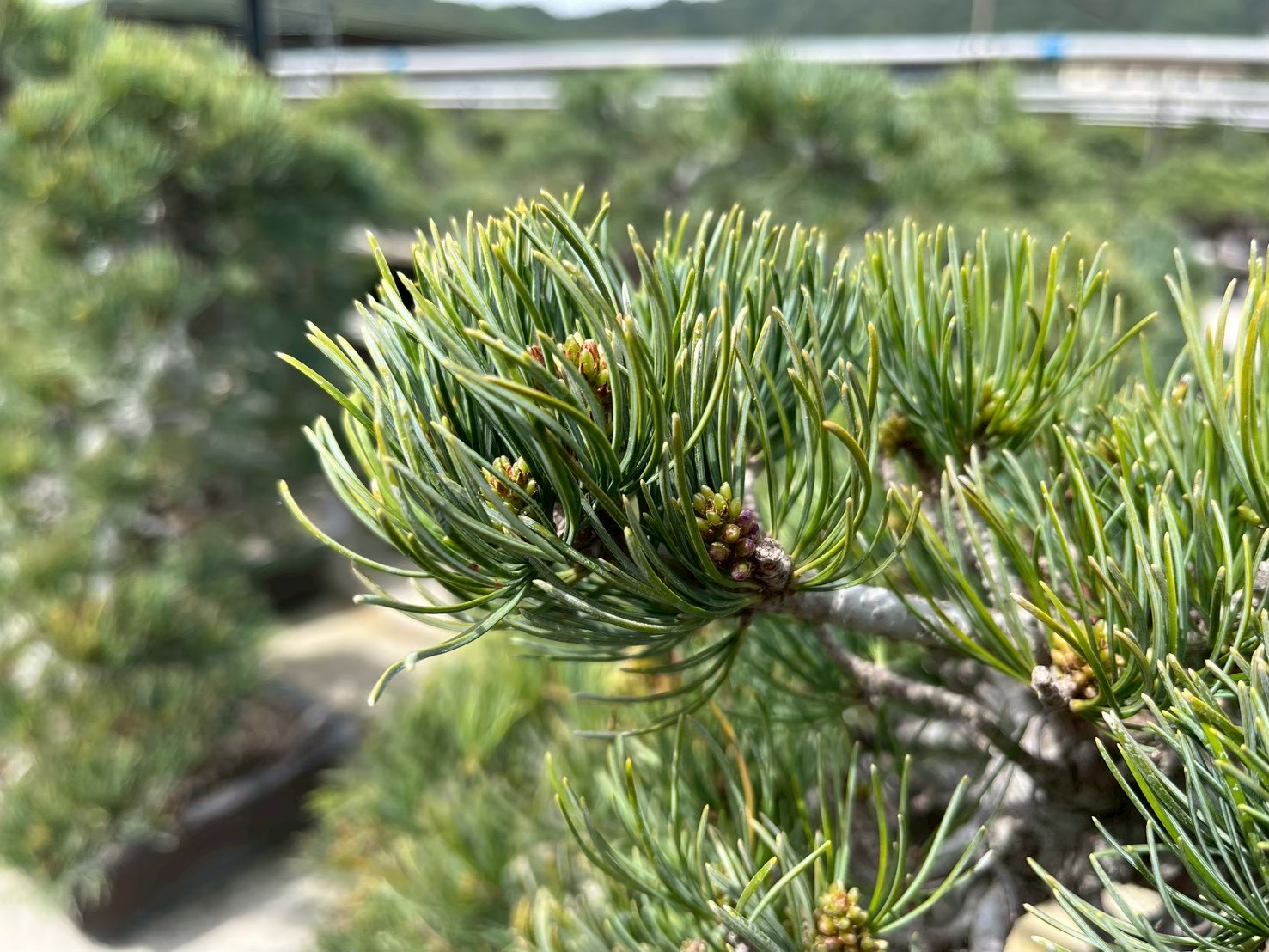
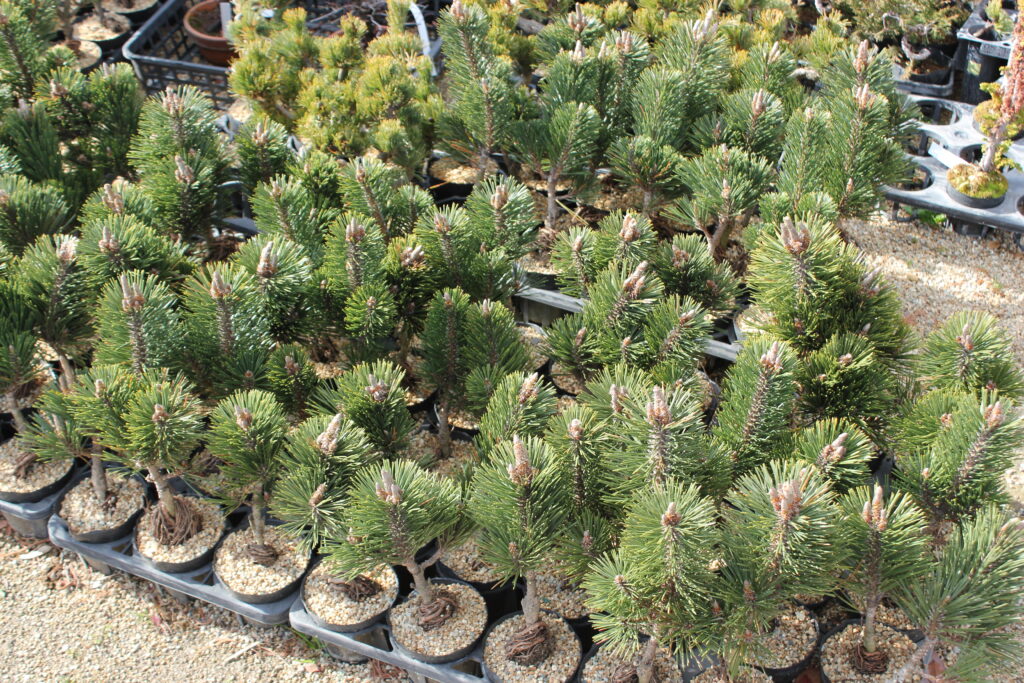
Pines sit at the other end of the scale. As I described in my post on five-needle pine, a single tree starts with a black pine seedling raised for several years, then a graft, then years more of growing on before it’s good enough to sell as material. Along the way, only about half of the grafted trees survive to become sellable material; the rest die.
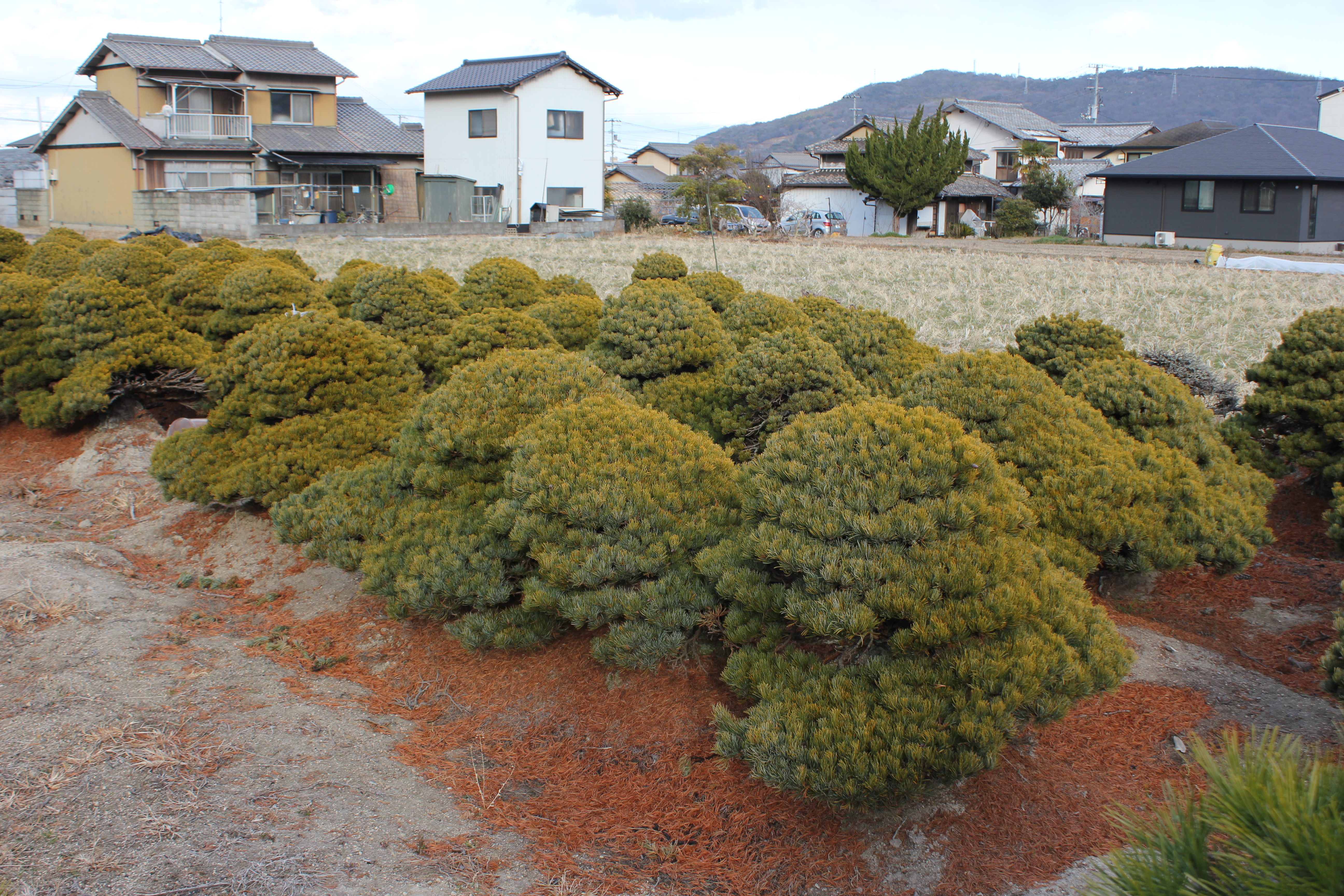
And that’s only the beginning. In the field, I work on five-needle pines of very different ages. Some are around ten years old and small enough that I can remove their old needles in just a few minutes. Others are thirty or forty years old, with trunks and branches that clearly reflect every one of those years. That difference can’t be rushed. A grower can shape a tree, but only time can thicken a trunk or age its bark.
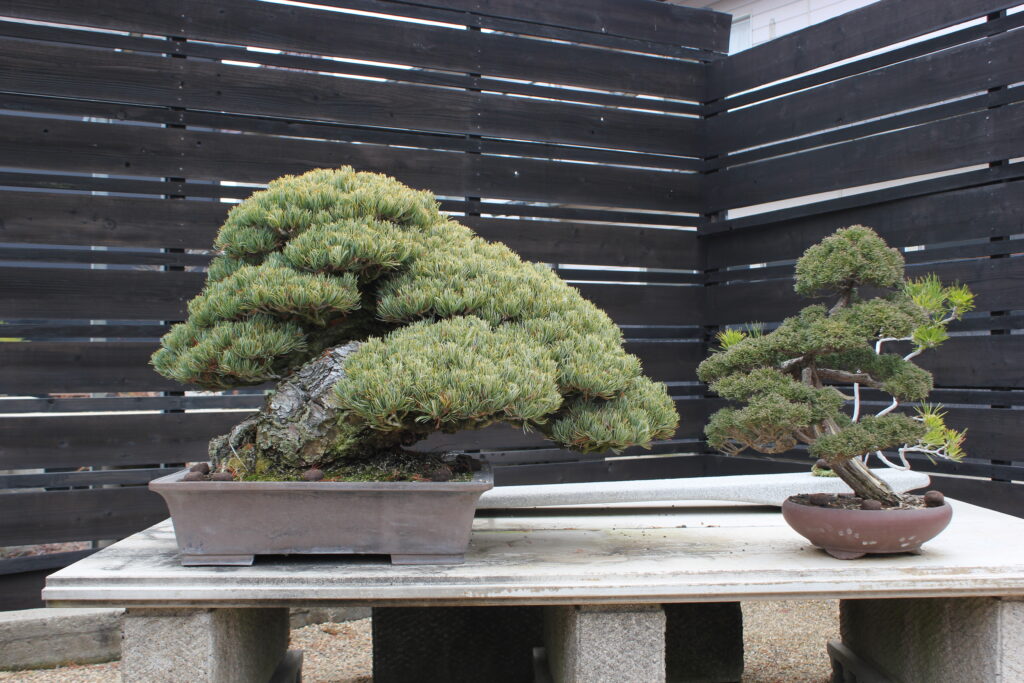
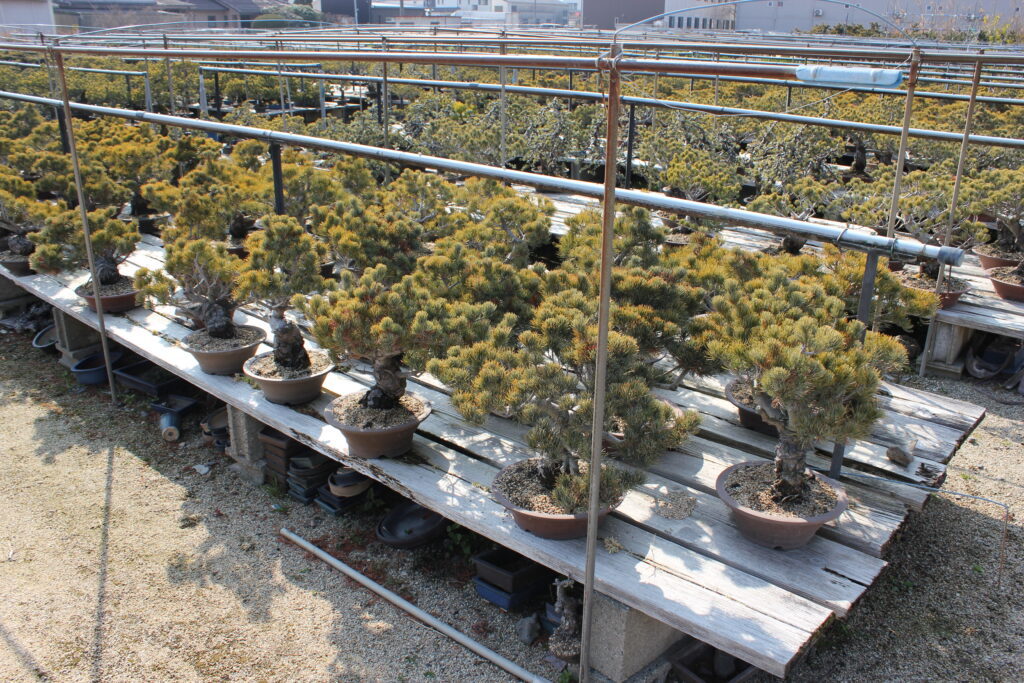
One thing that surprised me is how much of Takamatsu’s work is about material (sozai, 素材) rather than finished bonsai. Material is a tree that has been grown and given a basic structure, ready for further training and refinement, sometimes by the grower, and sometimes by another nursery or a bonsai artist elsewhere.
Mr. Konishi explained why this matters. A bonsai artist, however skilled, can’t create a pine from nothing. Without nurseries producing material, there would be nothing to work with. That’s why nurseries in Takamatsu grow their own material and also finish some of it into bonsai themselves.
So when you look at a finished pine bonsai, remember that its development may span several growers and generations: the grower who raised the material over years or decades, and the people who refined it afterward.
At the far end of the scale, the timeline stretches beyond a single career.
Mr. Konishi told me about a neighboring nursery where the pines being sold today were planted by the current owner’s great-grandfather. The people who planted those trees never sold them. Their great-grandchildren do.
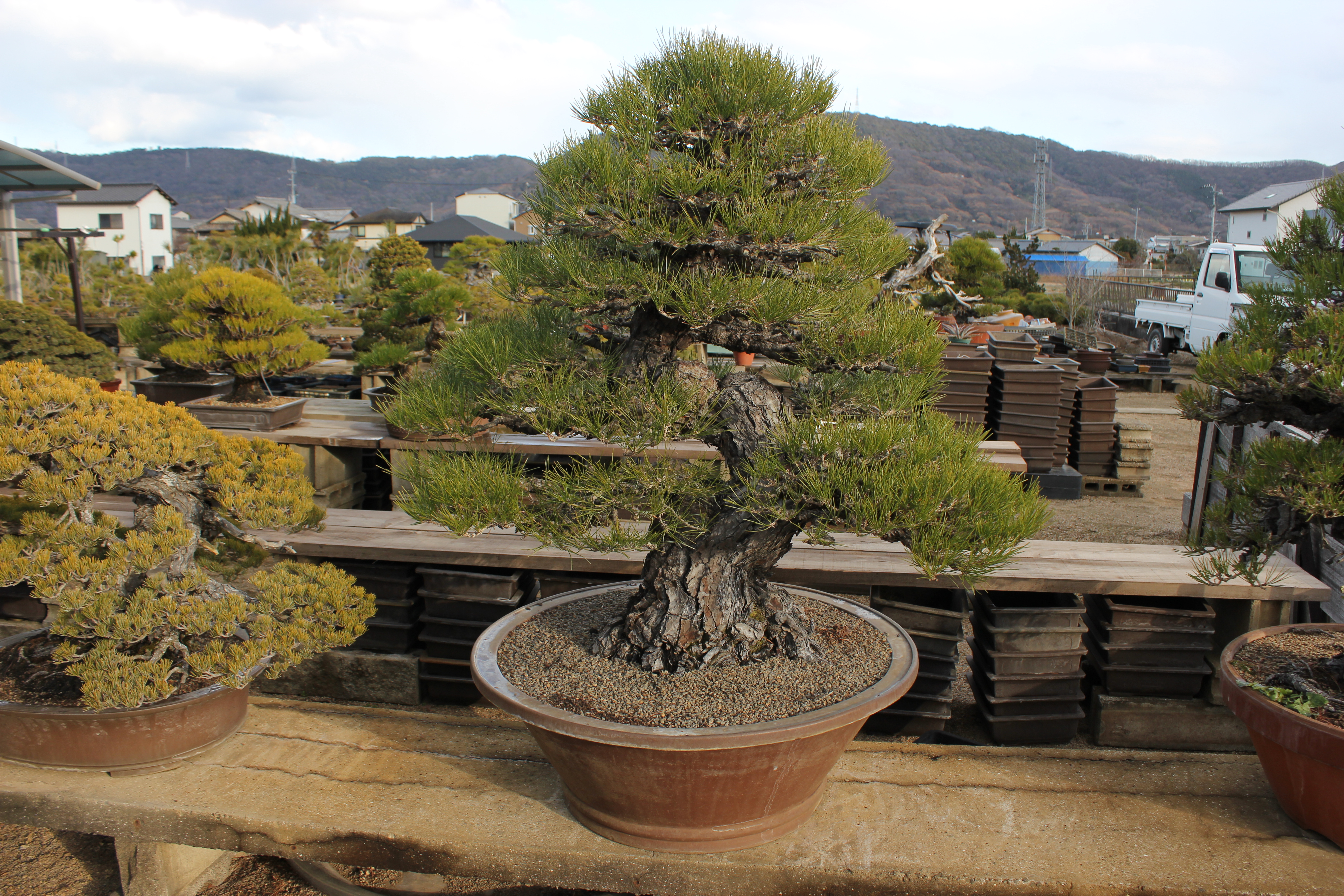
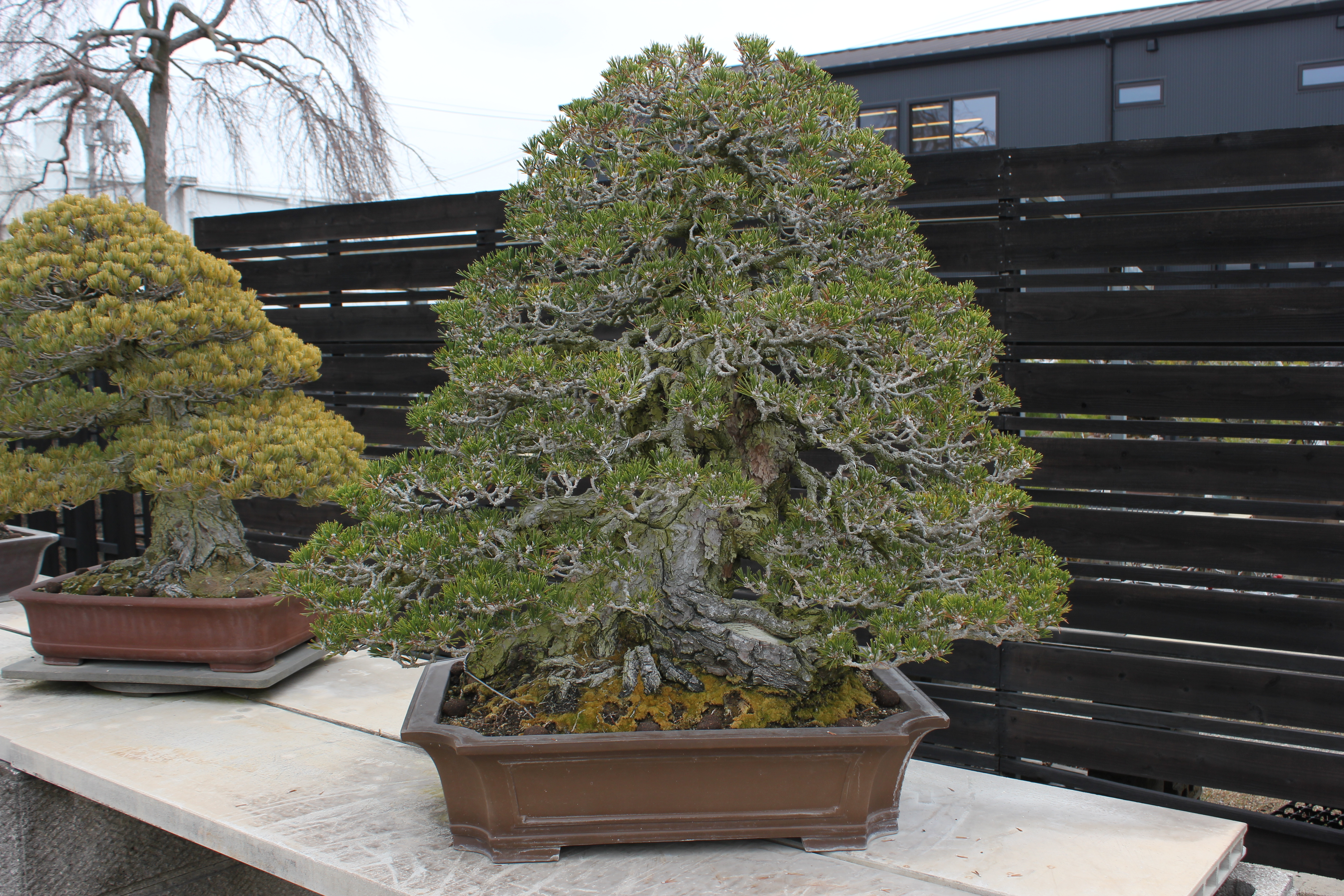
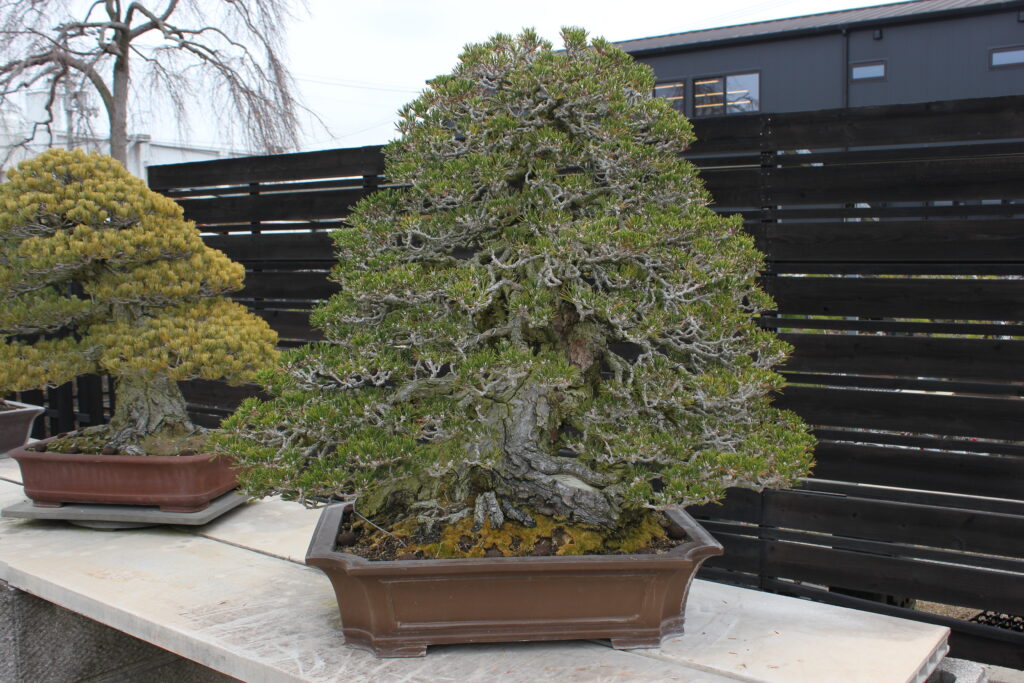
When I pointed out that anyone planting pines now would have to wait something like a hundred years to grow trees like those, neither of us had an answer for what happens once they’re gone. Some of the oldest trees in this area cannot be replaced within a single human lifetime. In my post on shimagi, I wrote about a black pine from an island in the Seto Inland Sea that the nursery estimates to be around 200 years old. Trees like that weren’t developed by one grower alone. They were passed down through generations.
This brings up something every bonsai buyer should know: the age on a label isn’t always what it seems.
One day I found a tree listed for sale online, described as 45 years old. It was a black pine variety that Mr. Konishi’s nursery grows, and he had sold several dozen of them to that seller. When I showed him the listing, he laughed and questioned the figure: his nursery had only been growing that variety for a little over twenty years. He wasn’t annoyed. If anything, he was glad to see a well-known seller promoting trees from his nursery.
The exchange made me realize that an age label doesn’t always tell the whole story.
In bonsai, an age can be counted in different ways: from when the seed was sown, from when a tree was collected or grafted, or simply estimated from how the trunk looks. The age of the tree itself and the number of years it has been trained as a bonsai are also two different things. Was the age based on records, an estimate, or the tree’s appearance? If a tree’s age matters to you, it’s worth asking what the number actually means.
Age also isn’t the only thing that sets a tree’s value. When I asked Mr. Konishi how the nursery prices its trees, he named three things: age, shape, and the quality of the bark. A younger tree with a beautiful form and good bark can be worth more than an older tree without them.
This is one of the things I enjoy most about showing guests around Takamatsu’s nurseries. In a single field, you can see trees at every stage: young grafts, trees a decade along, trees that have been growing for longer than anyone working there has been alive. Standing among them, the question “how long did this take?” starts to answer itself.
Some of the oldest trees in Kinashi have their own stories, including pines that survived the Second World War. That’s where I’ll go in the next post.
Source note: The timelines, pricing factors, and stories in this article come from my own experience helping out at Konishi Shorakuen and from conversations with Mr. Konishi, shared with his permission. The two-to-three-year figure for maples reflects what Mr. Konishi told me about one grower’s methods, not a general rule. The age of the island pine is the estimate given by the nursery that owns it.
Want to see how bonsai develop over time? I offer private bonsai experiences in Takamatsu, arranging visits to working nurseries where you can see young grafts, developing trees, and mature material that has been growing for decades. I help you understand what you’re seeing, with explanations from the growers whenever possible. [Message me on WhatsApp] to arrange a private visit.