How Long Does It Take to Make a Bonsai? Answers from a Takamatsu Nursery
Kurokawa
Attractive Trip in Shikoku
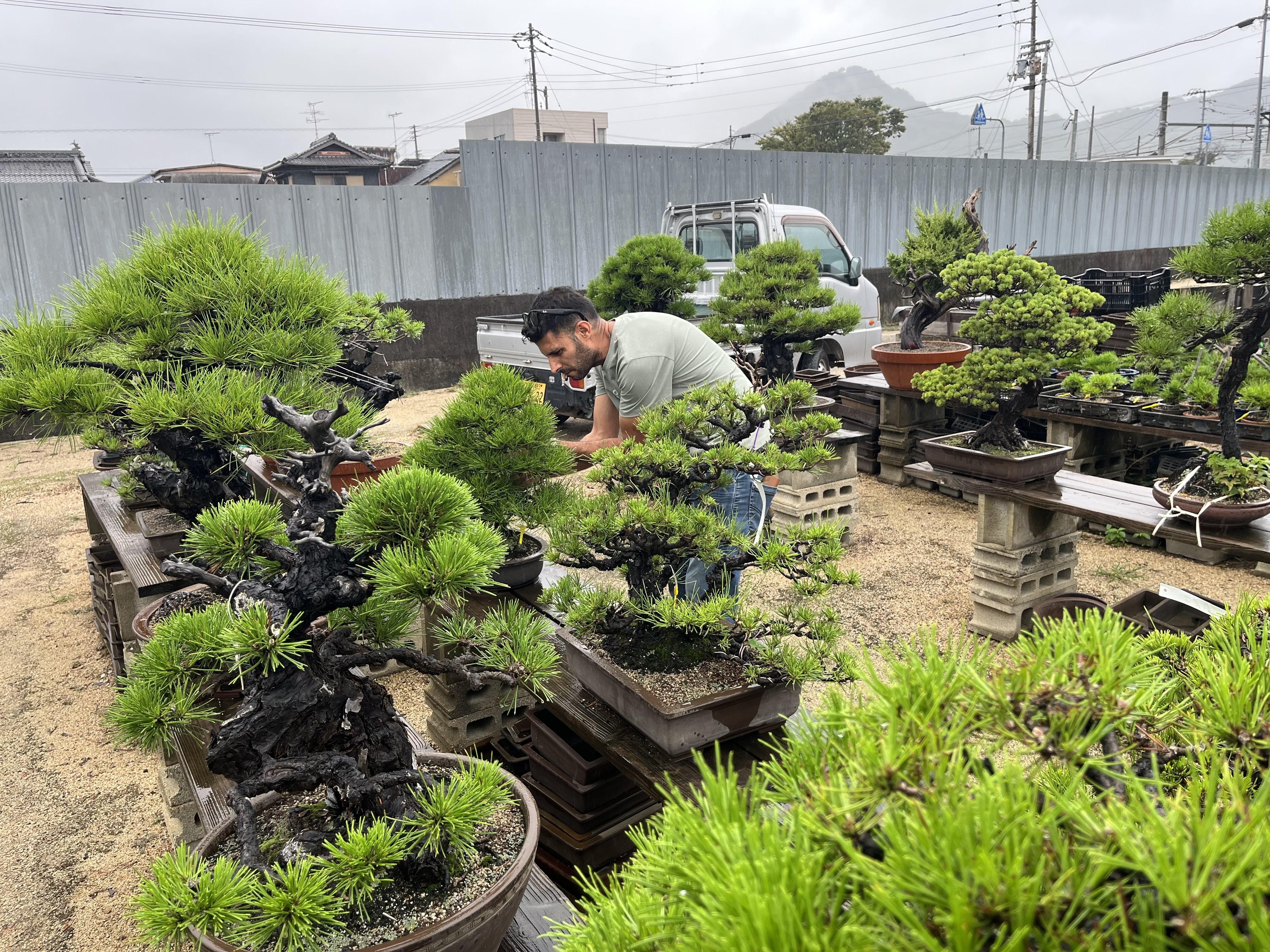
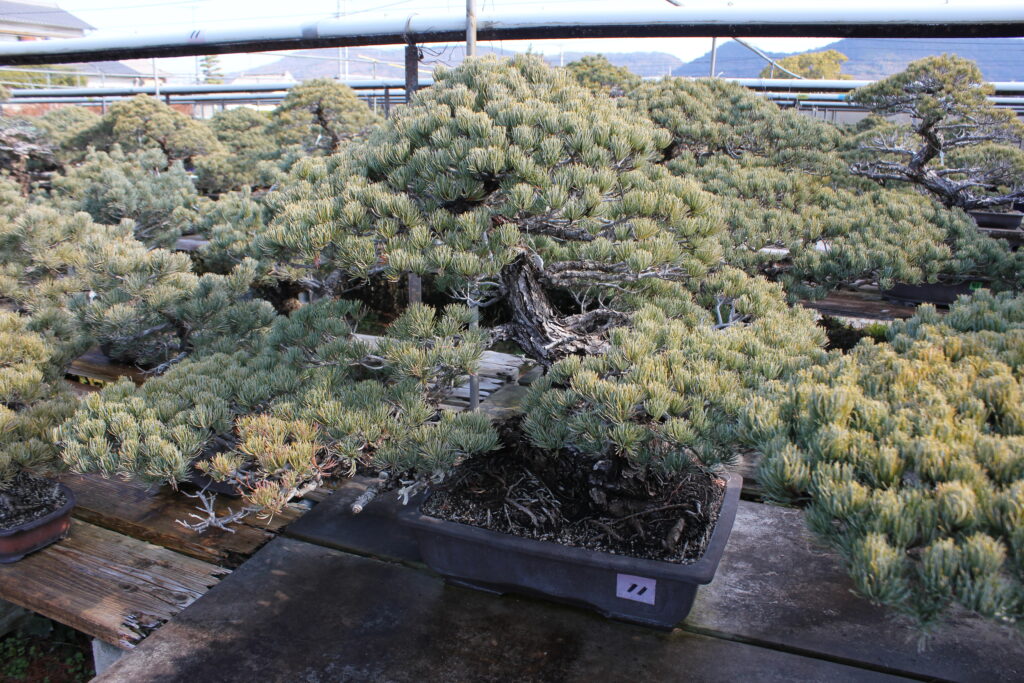
In my last post, I explained how five-needle pine is made: years of growing black pine rootstock, grafting by hand, and losing about half the trees along the way. That’s the big picture. This post is about the small one: what the work at a bonsai nursery actually looks like.
I help out at Konishi Shorakuen, a nursery in Kinashi, during its busy season, and work as an interpreter when buyers from overseas visit. Most visitors to Japan see bonsai on display, finished and perfectly groomed. What they rarely see is the work that goes into keeping thousands of trees that way. The work changes with the seasons, so what follows isn’t a single day’s schedule but a look at the tasks that shape life inside a working nursery through the year.
Much of my work at the nursery has involved furuha otoshi (古葉落とし), removing old needles from the five-needle pines.
A pine doesn’t drop all its needles at once. Older needles stay on the branches alongside the new ones, and left alone, the inside of the tree becomes dense and crowded. Removing old needles helps open up the interior of the branches, making it easier for light to reach the inner parts of the tree. It also helps growers maintain the tree’s structure and appearance. The exact approach depends on the species and the condition of the tree; on pines, it’s typically done from late autumn into winter.
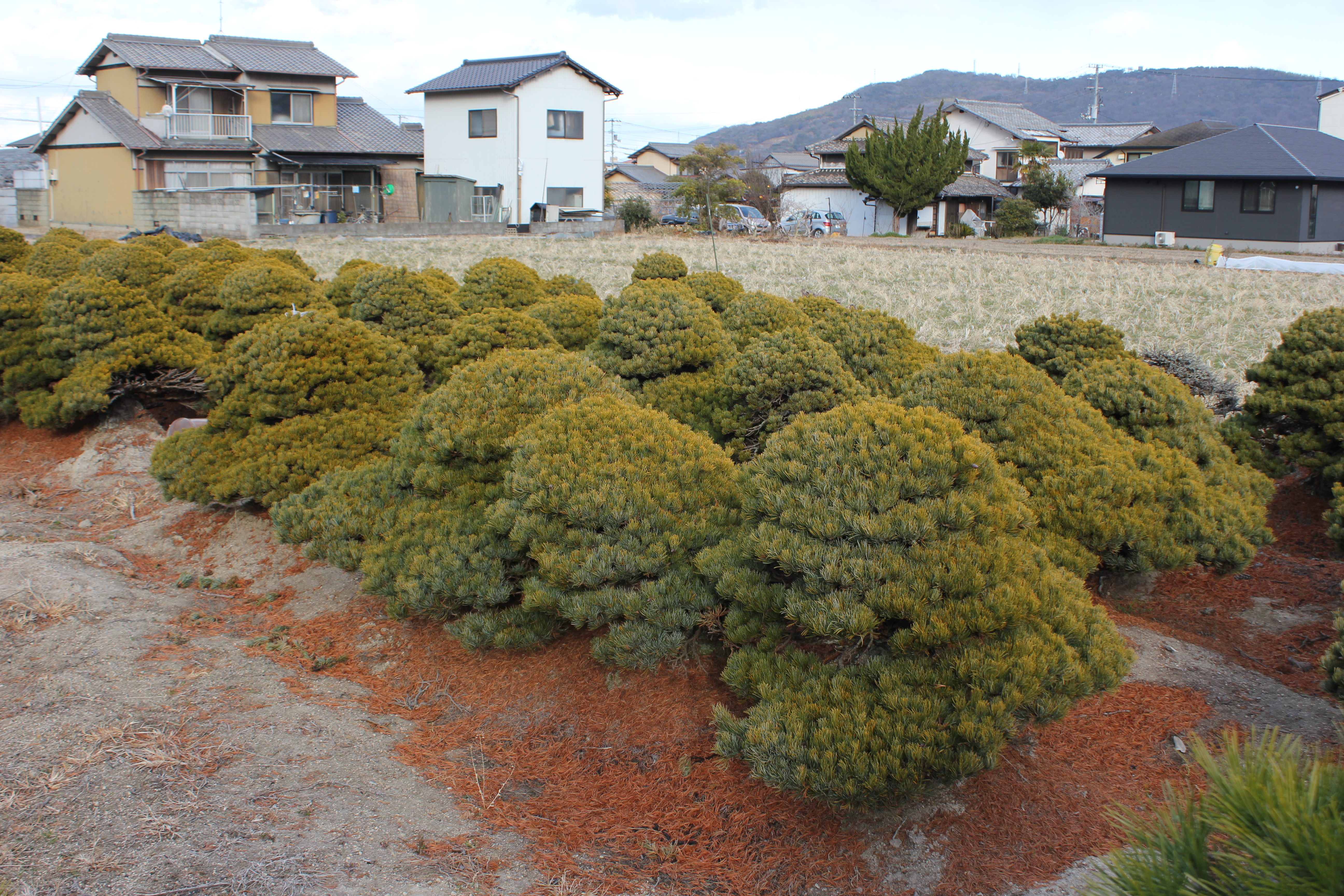
It sounds simple. It isn’t fast. For trees in the field, I use a small hand rake, scraping it through the branches to knock the old needles loose. How long a tree takes depends entirely on its size. A small one around ten years old takes a few minutes. A tree of thirty or forty years can take more than ten. And the big five-needle pines the nursery grows large on purpose, to supply cuttings for grafting, are enormous; one of those takes a very long time. Potted trees are handled more gently: no rake, just bare hands.
Two things I learned quickly. First, always work from the top down. If you start at the bottom, the needles you knock loose higher up fall right back onto the branches you’ve just cleaned, and you end up doing the work twice. Second, the rake looks rough, and the first time I used it I was nervous about breaking something. But five-needle pine branches are surprisingly supple and don’t snap easily, so you can work through them with confidence.
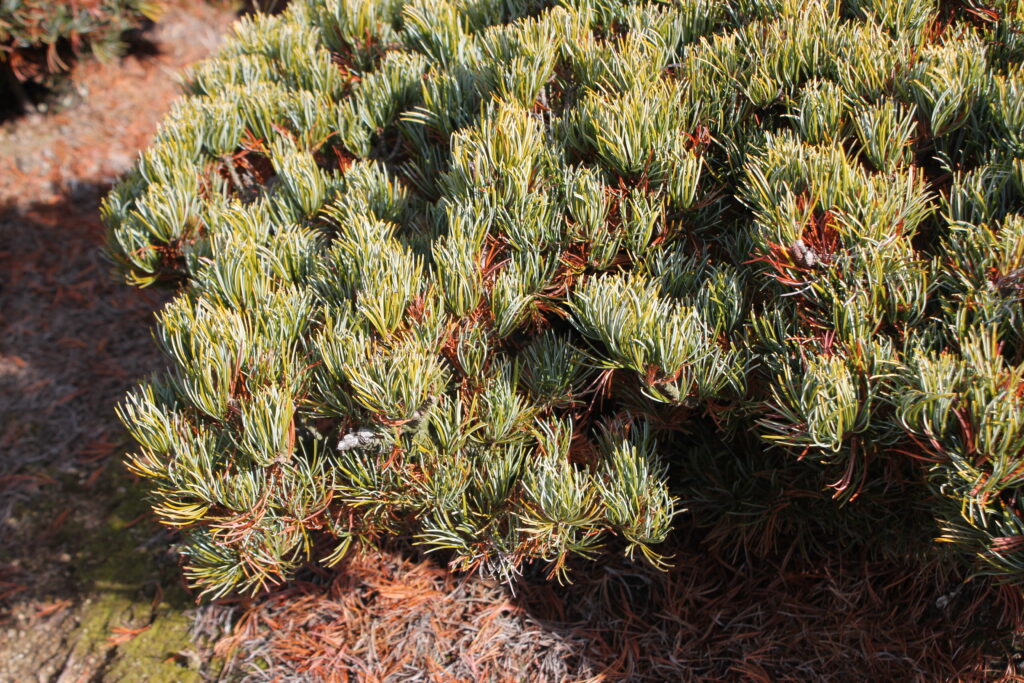
What I didn’t expect was how much I’d learn while doing it. Work like this leaves plenty of room for conversation, and much of what I’ve written in this series so far, from the five-needle pine figures to the history of the trade, came from conversations while my hands were busy with needles.
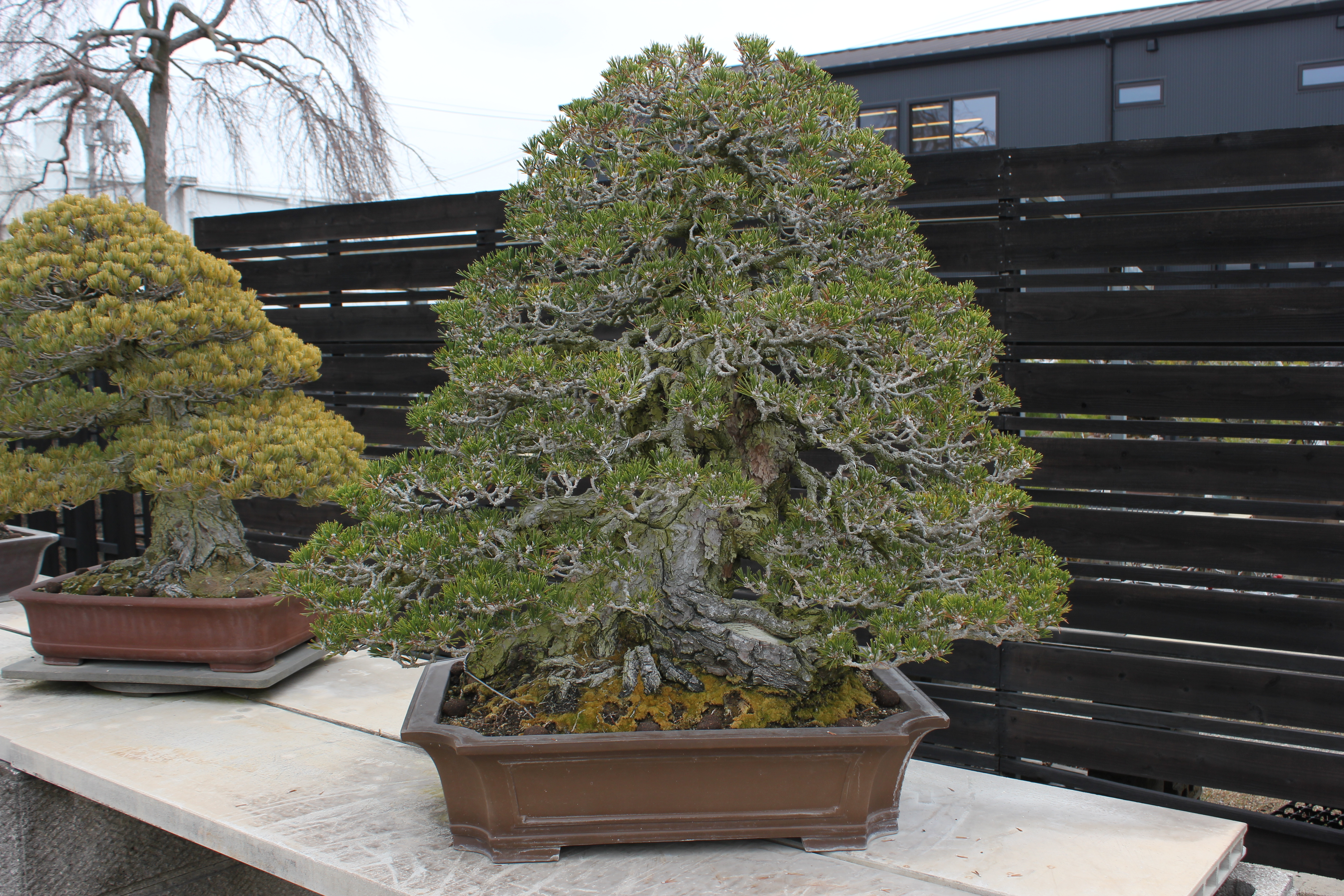
Not every tree here is a bonsai. Some of the five-needle pines are garden trees grown in large pots, standing over two meters tall. They’re much larger than the bonsai most visitors imagine, but they still need careful pruning and shaping. Working on a tree that size is a slow process of stepping back, looking, and deciding which branch stays and which goes.
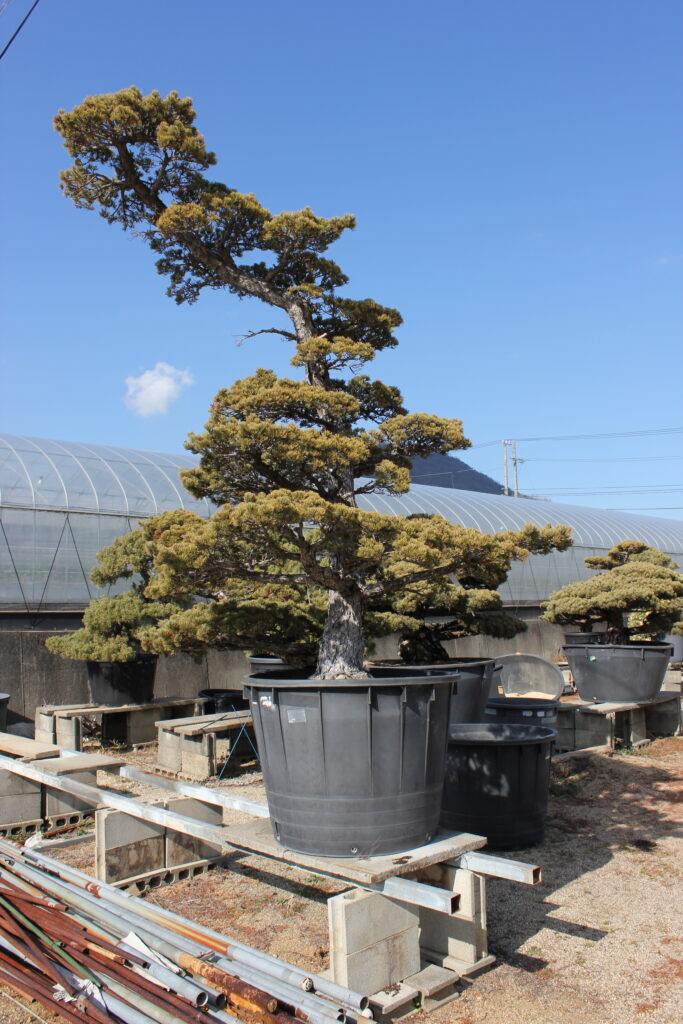
While I was working on one, Mr. Konishi asked me, “Shaping them like this starts to get fun, doesn’t it?” It does. There’s a moment when a tangled branch suddenly opens up and the shape of the tree becomes clear, and you understand a little of why people give their lives to this.
Garden trees like these are an important part of the business. As I described in the last post, one morning we root-balled one of them for export to Denmark: lifting it out with a crane, wrapping the roots in burlap and wet sphagnum moss, then wrapping everything again in tarp. Garden trees don’t sell for bonsai prices, but they’re steady, important income.
The part of the job that surprised me most wasn’t in the field at all. It was the paperwork.
According to Mr. Konishi, only two bonsai nurseries in Takamatsu handle the export process themselves, and Konishi Shorakuen is one of them. His father started exporting, and the nursery went through the permit process with guidance from JETRO, Japan’s trade promotion organization. Getting there took a great deal of time and money, which is why many other nurseries in the area bring their trees to these two when they want to ship abroad.
Shipping a container of bonsai isn’t just a matter of loading trees. Each pot needs a tag, which is checked during the inspection before the container is sealed. With dozens or even hundreds of trees in one shipment, keeping every tag and record in order is essential, and it’s not unusual for a missing tag to be pointed out at the final check. Then everything has to be entered into a computer and turned into documents: what’s being shipped, how many, and where each one is going.
Requirements also differ by destination. For shipments to the United States, Mr. Konishi explained that the trees he exports must have their roots thoroughly cleaned of soil to meet the import requirements. The nursery has handled such shipments, but because the process involves considerable extra work, it has generally done so in small lots. Some other destinations accept trees with soil still on the roots, which is far easier.
And while all this is going on, the phone rings. More than once, I’ve seen Mr. Konishi step away from a tree to take a call from someone abroad asking about bonsai. When overseas buyers visit the nursery in person, I step in as an interpreter, helping them communicate with the grower.
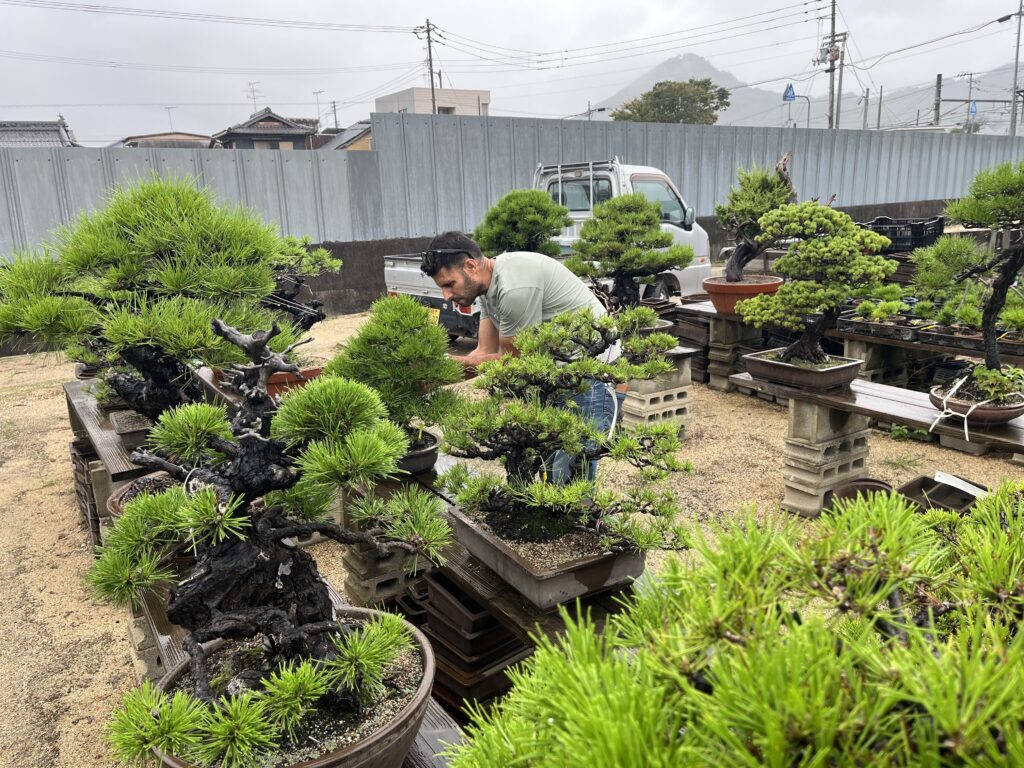
Much of my time here has been in winter, but the hardest season, by every account, is summer. In the summer heat, potted trees can dry out quickly. Mr. Konishi’s wife, who married into the nursery from a family with no connection to bonsai, put it simply: in summer, you’re watering all day. There are insects and snakes too. “But it’s amazing what you get used to,” she told me. “Now I don’t think anything of it.”
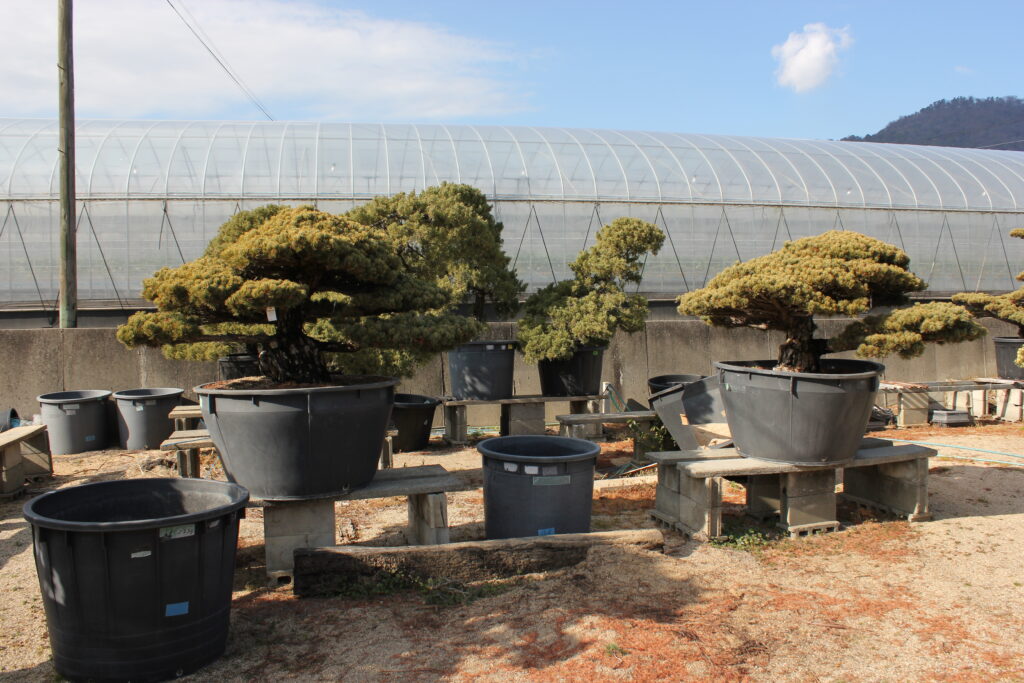
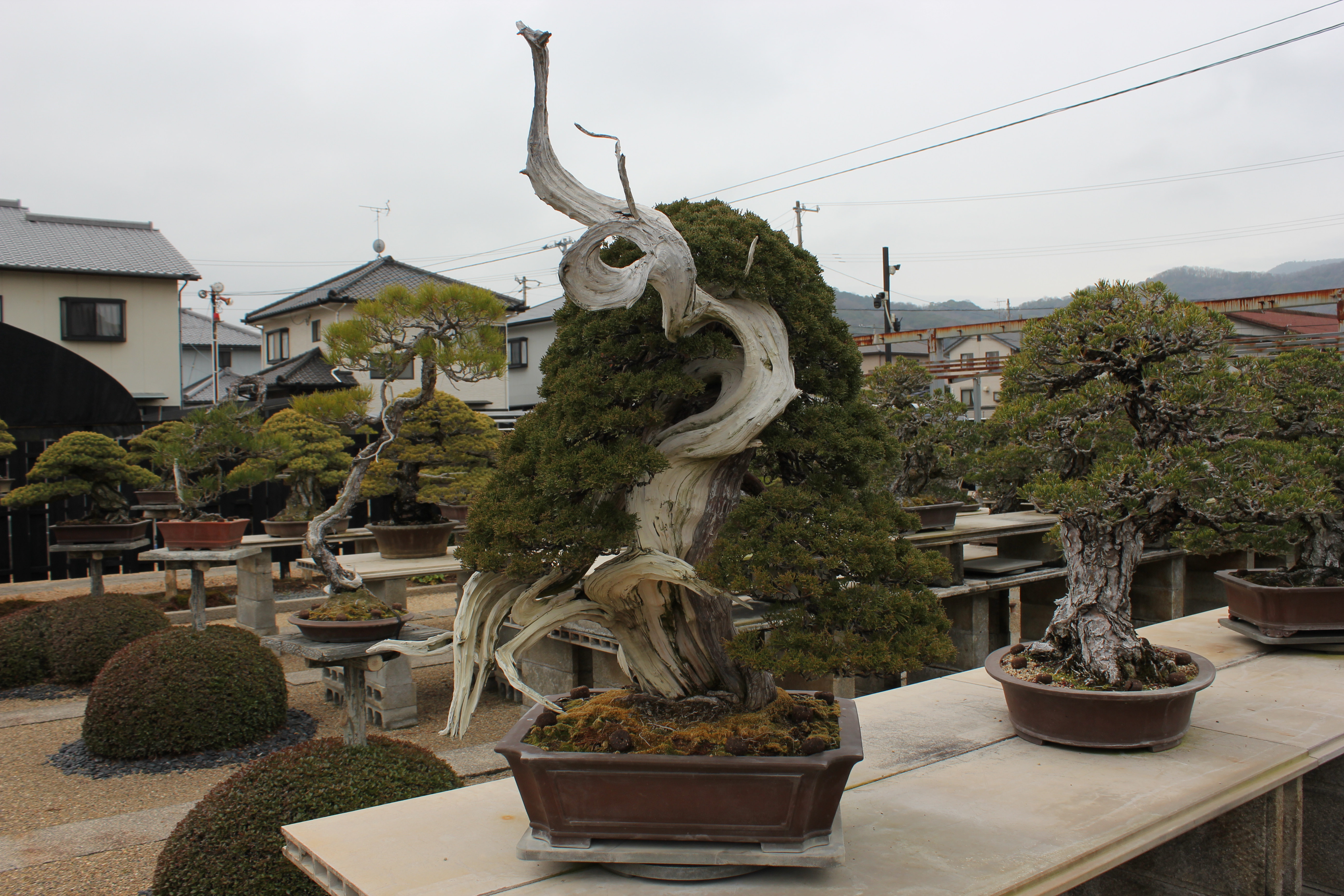
When you visit a nursery like this, you’ll see benches of trees in pots and rows of pines in the field. What you won’t see, unless someone explains it, is the work behind each one: the needles removed by hand, the branches chosen one by one, the tags, the inspections, the watering through the heat of summer.
In the next post, I’ll look at a question I hear from almost every guest: how long does it actually take to make a bonsai?
Source note: The descriptions of work in this article come from my own experience helping out at Konishi Shorakuen. The information about exports, permits, and destination requirements comes from conversations with Mr. Konishi and is shared with his permission; it describes the nursery’s own experience, not a complete guide to current import rules, which vary by country and change over time. The general explanation of old-needle removal reflects standard bonsai practice for pines.
Want to see the work behind the bonsai for yourself? I offer private bonsai experiences in Takamatsu, arranging visits to working nurseries and helping you understand what you’re seeing, with explanations from the growers whenever possible. [Message me on WhatsApp] to arrange a private visit.