The Forgotten Story of Shimagi: How Island Pines Became Bonsai Material
Kurokawa
Attractive Trip in Shikoku
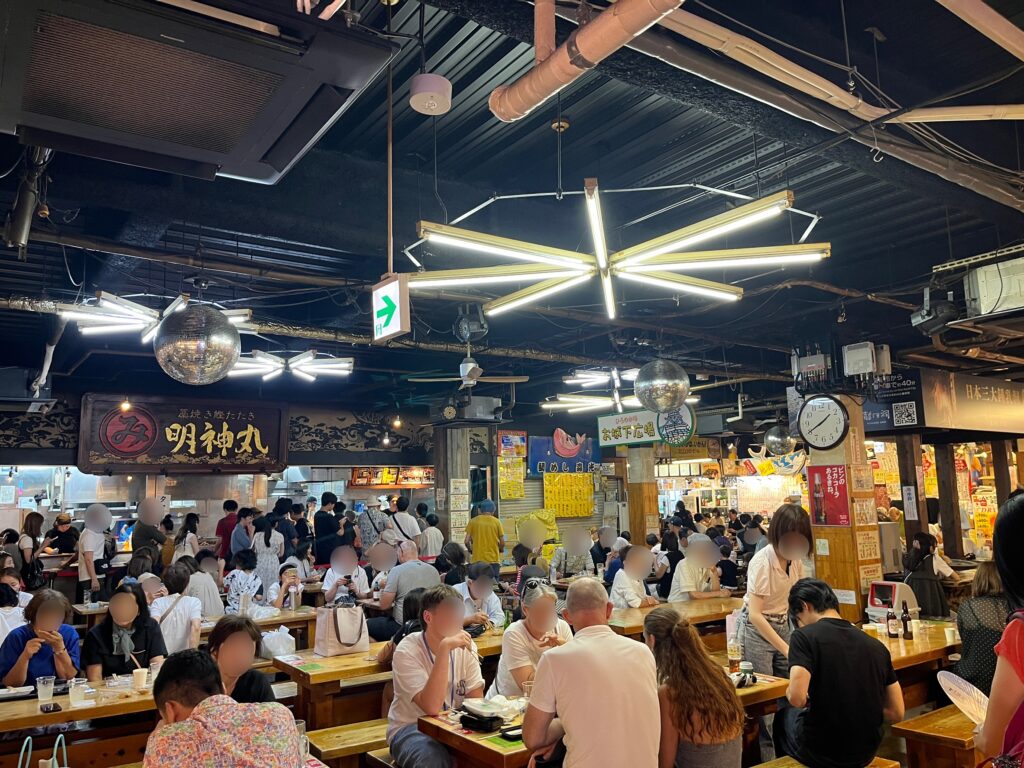
If you read my last post about kayaking on the Niyodo River, you’ll remember I promised two things: my favorite stalls at Hirome Market, and the dishes that pair best with katsuo no tataki. Consider this the follow-up — though it turned into something bigger than a food list. To really understand Kochi, you need to understand how we drink, and why.
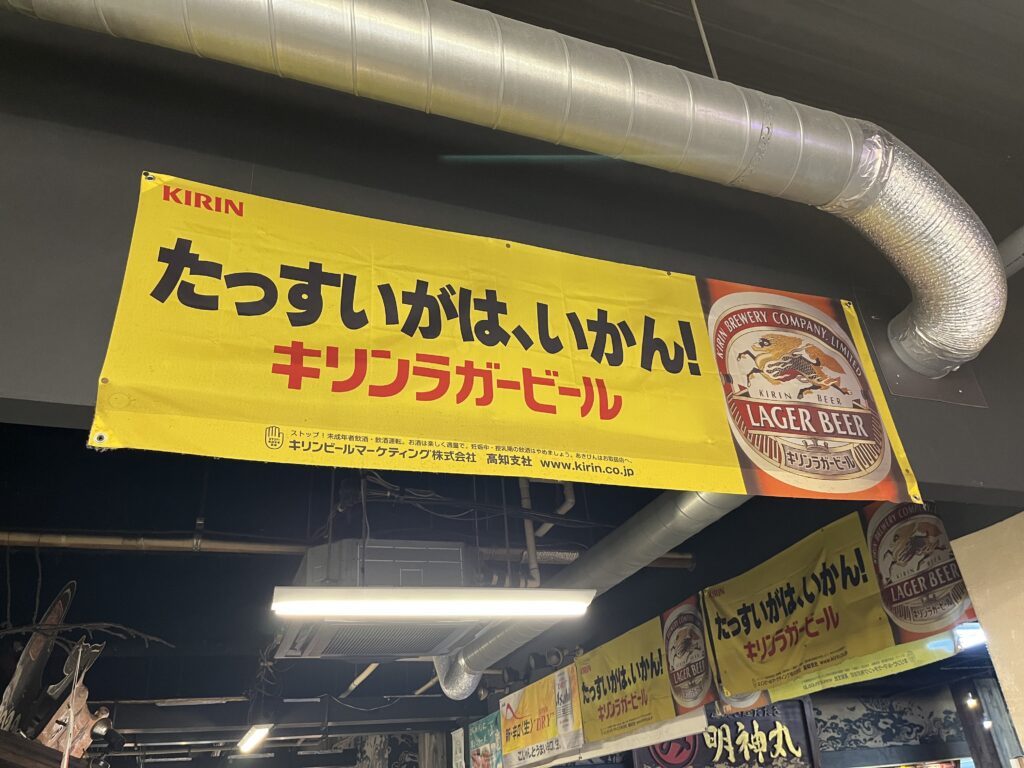
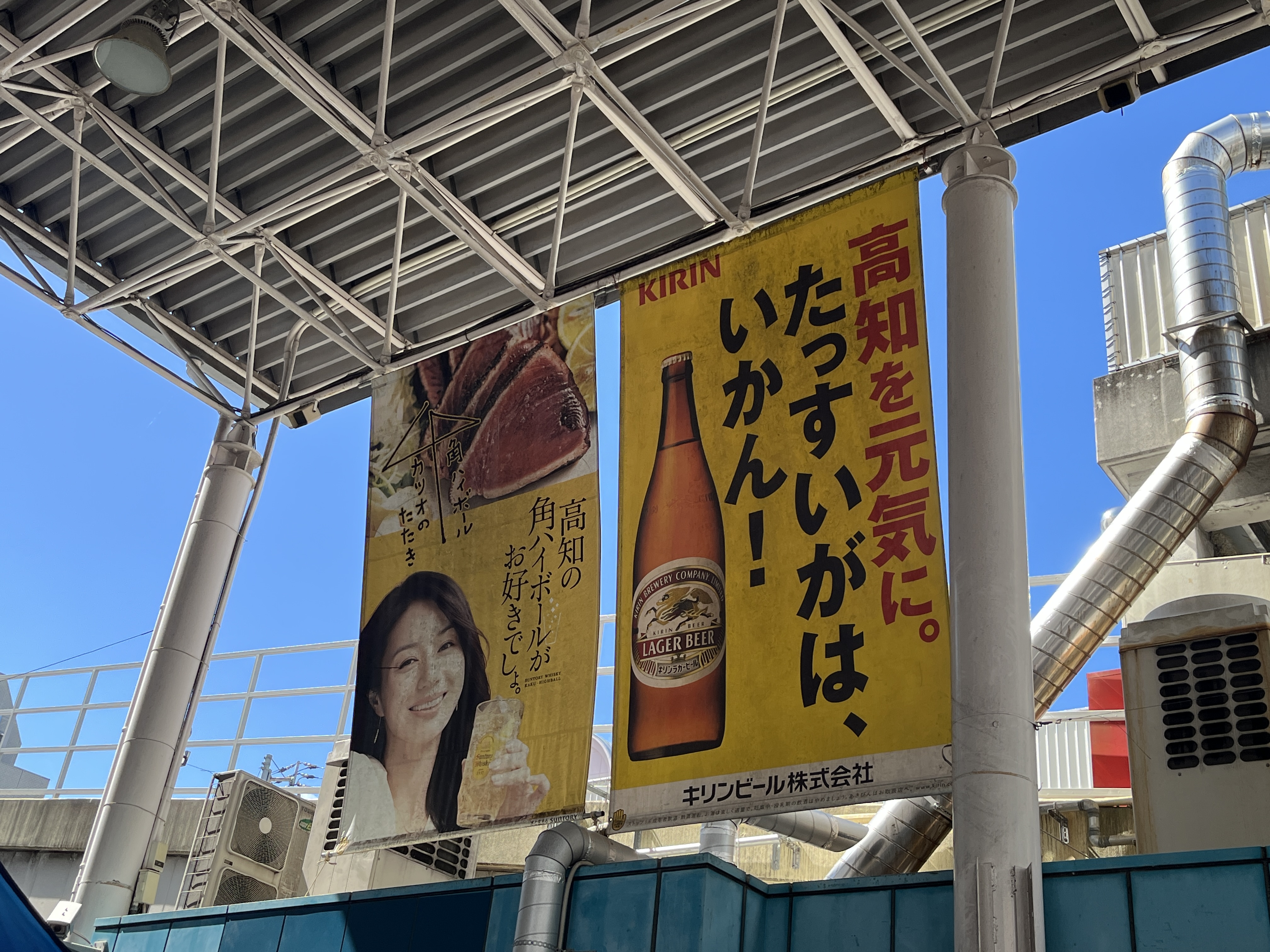
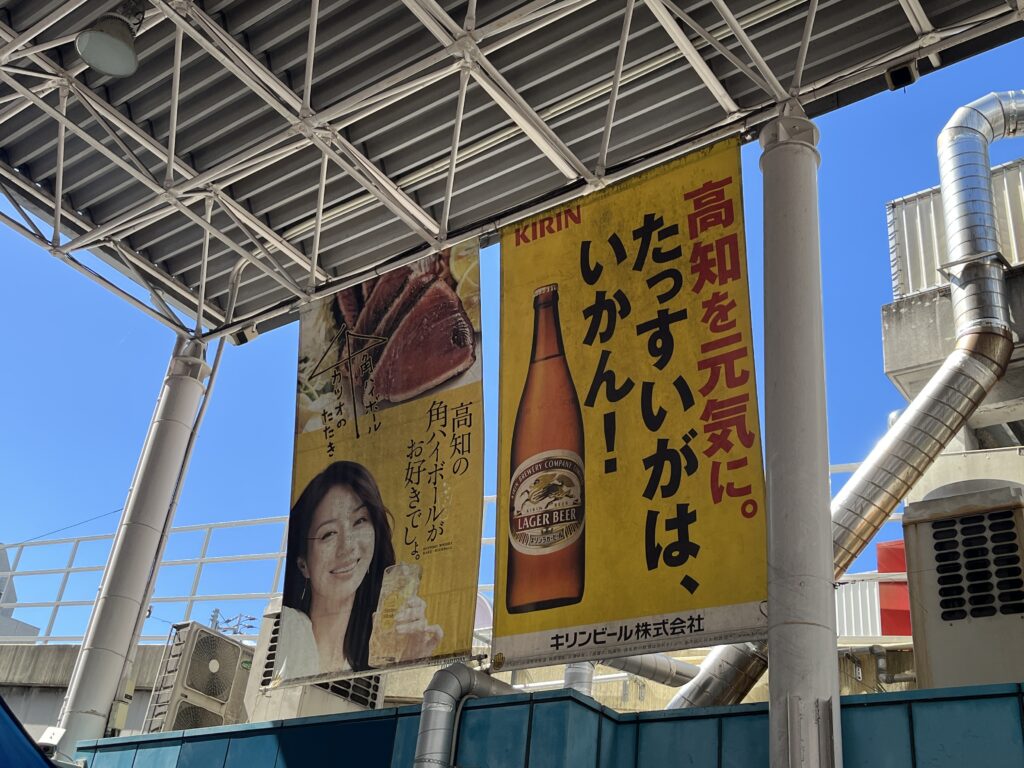
Spend even a day in Kochi and you’ll likely spot it somewhere — on a banner, a poster, maybe near the airport arrivals hall: a phrase that means nothing to most visitors, tassui ga ikan.
It’s local dialect, and it roughly translates to “weak just won’t do.” Originally, tassui described something thin, watered-down, or half-hearted — and by extension, a person who lacks spirit or backbone. It’s not really an insult, though. Locals use it more like a nudge, half scolding and half affectionate, the kind of thing you’d say to a friend who’s giving up too easily. The phrase got a big boost from a regional Kirin beer campaign decades ago built around the line “tassui ga wa, ikan!” — “weak beer just won’t do!” — and it stuck so well that around here, it now says something about more than just the beer.
Once you know the phrase, you start noticing it everywhere — and it’s not a bad way to sum up the local attitude toward food, drink, and effort in general.
I don’t want you to just take my word for this one, so here’s something backed by an actual government survey: Japan’s Ministry of Internal Affairs runs an annual household spending survey (kakei chōsa) that ranks prefectural capital cities by category, and Kochi City has shown up at or near the very top of the alcohol spending rankings for years — at one point taking the outright #1 spot nationwide, and more recently landing in the top three alongside Tokyo’s 23 wards and Saitama.
Locals sometimes describe themselves with the word igossou — stubborn, hot-blooded, uncompromising. I won’t claim that one statistic explains a whole culture, but it’s a fun data point to bring up at dinner, and it tracks with what you’ll see at any local table.
If you’re invited to a proper Kochi drinking party — locally called an okyaku — be warned: there are rules, and they are not optional.
The most well-known is kenpai and henpai, a ritual of offering and returning cups. A younger or lower-ranked person offers their cup to someone senior as a sign of respect. That person drains it, then fills it and hands it back — and now it’s your turn to drink again. At a lively table, this happens over and over, with different people, all night. Visitors from other parts of Japan are often stunned by it. In Kochi, it’s just how a party works.
Then there’s bekuhai — my personal favorite, and one I actually own a set of. It’s part drinking game, part practical joke, and it’s been part of traditional Tosa banquet culture for generations, alongside a finger-guessing game called hashiken.
Here’s how it works. A wooden top is spun, with a small blue mark on its axis pointing to whoever has to drink next — and to which of three trick cups they’re stuck with. Each cup is a different mask: a tengu, a hyottoko, and an okame. The tengu’s cup has a long, pointed nose on its base, so there’s simply no way to set it down until it’s empty. The hyottoko’s cup has a small hole hidden near the mouth — cover it with your finger while you drink, or the sake leaks straight out, and either way you can’t put it down until it’s finished. The okame’s cup is the gentlest-looking and the cruelest: if you set her face-down on the table, it’s considered rude to her, so you’re obligated to finish your drink and turn her face-up again before you’re allowed to put her down.
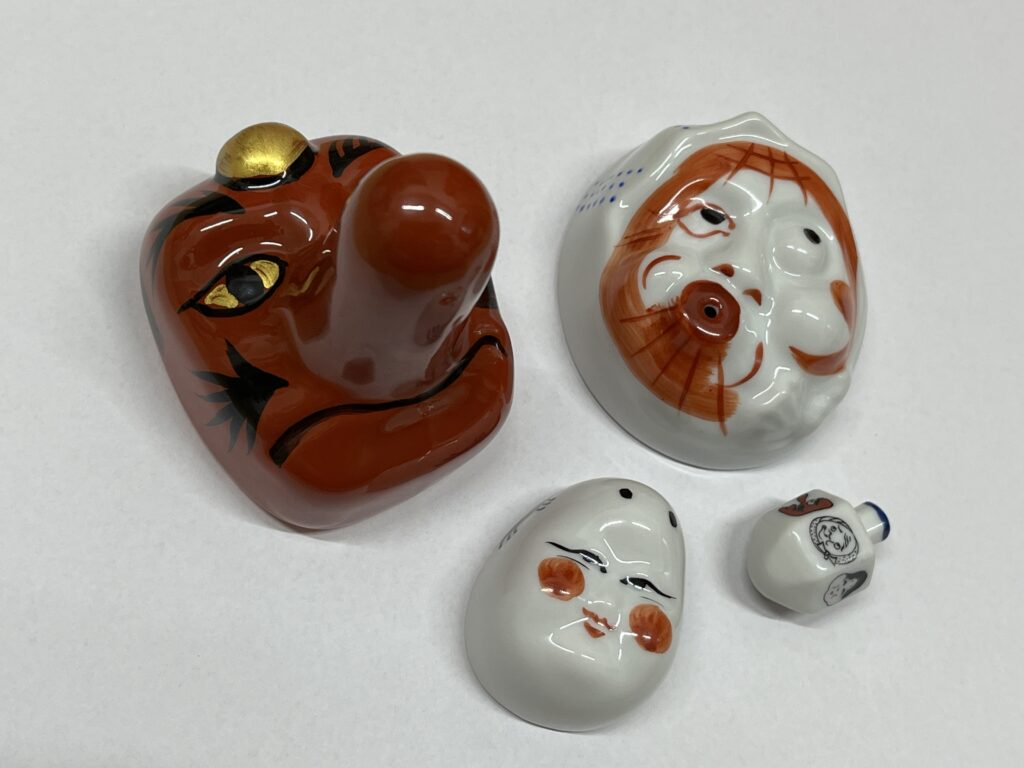
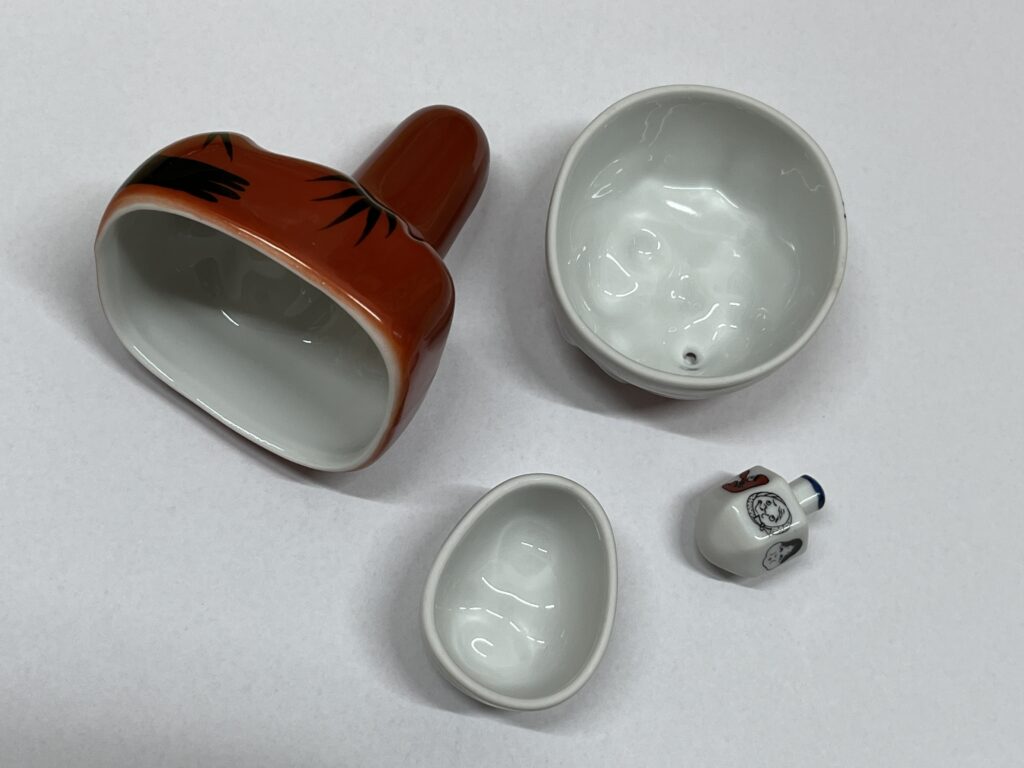
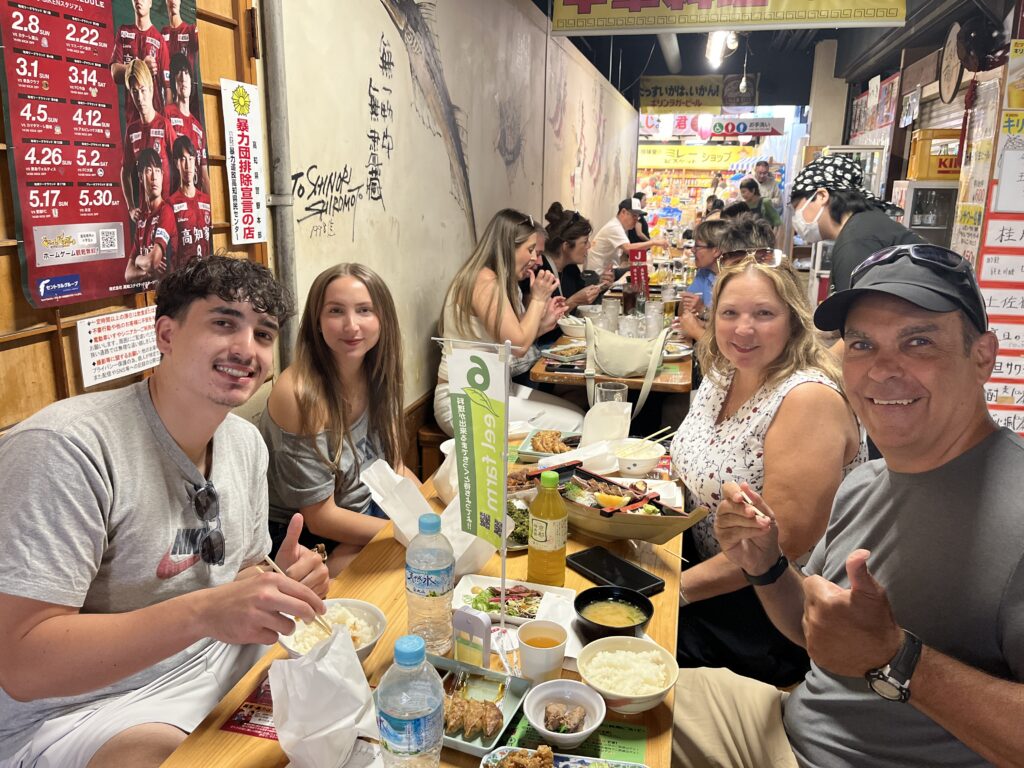
It’s a genuinely funny — and slightly chaotic — piece of hospitality, because once someone pours for you, custom says you finish before setting the cup down. There’s a local joke I always pass on to guests, usually with a laugh: that the women tend to out-drink the men in Kochi. Watch who’s still upright at the end of the night and you might see why.
Fair warning if you join one of my tours after a night like this: bring water, and maybe skip the second round of kenpai.
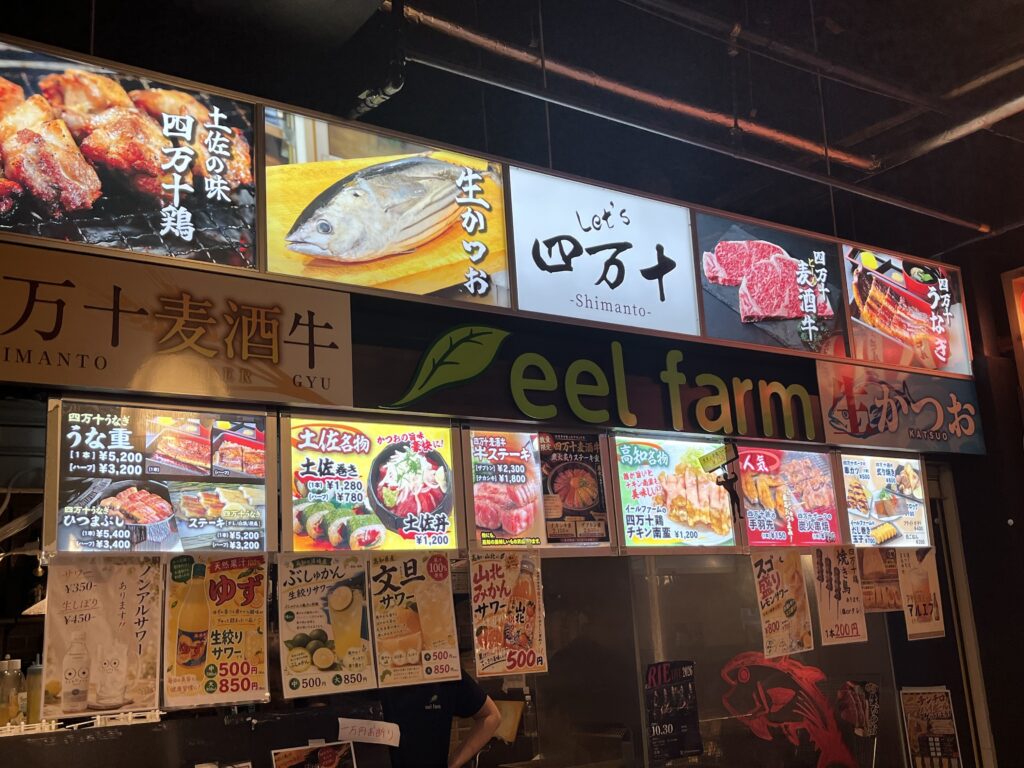
Last time, I mentioned I’d save my favorite Hirome Market stalls for another post — and one dish in particular deserves the spotlight: Shimanto beer-fed beef, served at a stall called Eel Farm.
The name is a little misleading, so let me clear it up: the cattle aren’t literally drinking beer. They’re raised in the Shimanto River area on a fermented feed made using brewery byproducts — spent grain and leftover brewer’s yeast — blended with molasses and grain, then fermented with lactic acid bacteria. It’s also raised far longer than standard beef, typically 24 to 29 months instead of the usual 22, which the producers say is what gives it that unusually clean, sweet finish without the heaviness you’d expect from a rich cut.
I’ll admit I was skeptical the first time I heard “beer-fed beef” — it sounded like a gimmick. Then I watched a guest devour it. He’d traveled to more than 100 countries and told me he’d eaten wagyu all over Japan. He ordered the steak, finished it, and ordered it again. Then a third time. By the fourth order, he looked at me and said, flatly, “That’s the best steak I’ve had in my life.” I still think about that comment on every tour.
If you’re the kind of traveler who tracks down the story behind your food, ask for it by name: Shimanto beer-gyu (四万十麦酒牛). The lean, marbled cuts are the ones to order if you want to taste exactly what he did.
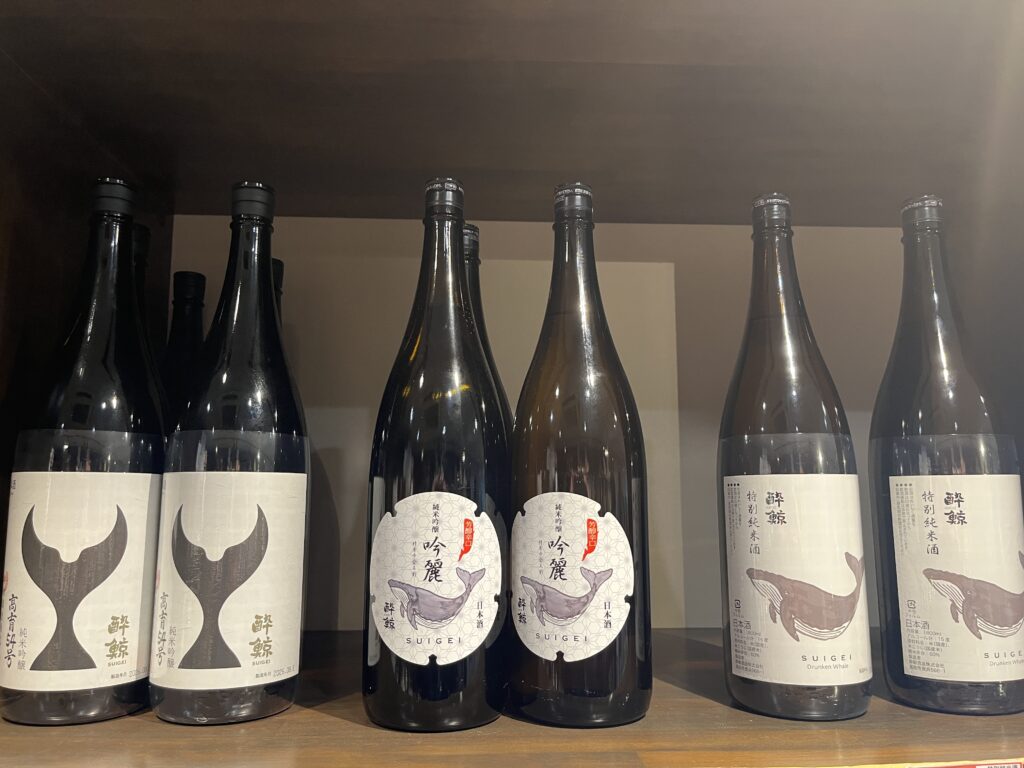
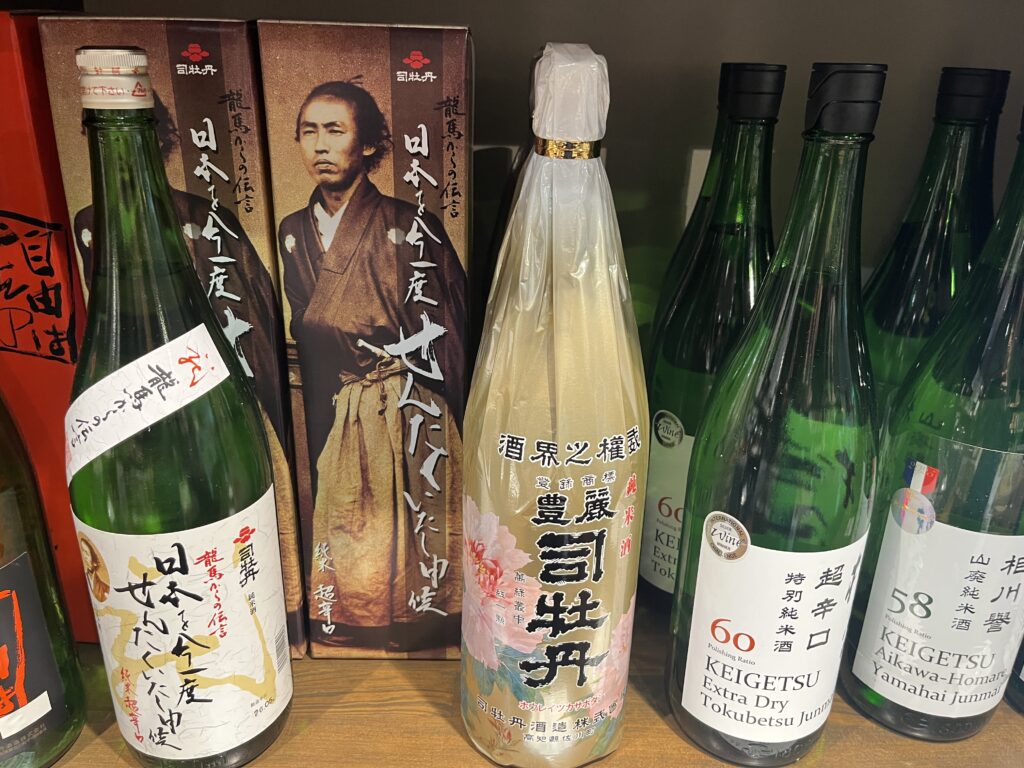
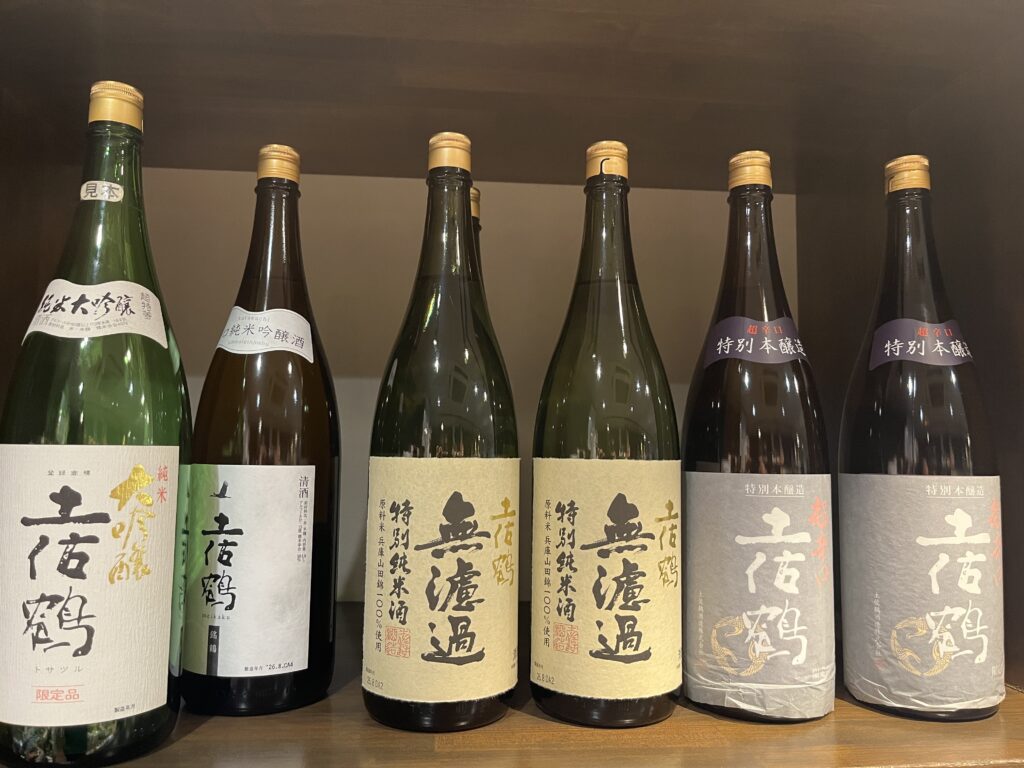
Kochi’s local sake style is almost always tanrei karakuchi — light-bodied and dry, in the same family as the famous sake of Niigata. That’s not a coincidence. Tataki is smoky, seared, and rich with the char of the straw fire; a heavy or sweet sake would fight it. A crisp, dry one cuts straight through the smokiness and the citrus of the ponzu, then gets out of the way. I don’t rank these so much as match them to the guest in front of me — here’s how I actually choose:
Just don’t call any of it tassui — around here, dry and sharp is a compliment, not a criticism.
Here’s a connection I find myself making on almost every tour, even if I can’t prove it historically: this same fearless, no-half-measures spirit that shows up at the dinner table also seems to run through some of the most consequential figures Kochi ever produced. I can’t claim their drive came from the drinking culture — that would be a stretch — but I do think both grew out of the same local soil, and three names are always worth knowing before you visit.
Sakamoto Ryoma, Kochi’s most famous son, brokered an alliance between two rival clans that helped end centuries of samurai rule — a move so far outside the accepted rules of his era that it could have gotten him killed.
Iwasaki Yataro was born into the lowest rank of samurai-adjacent status in Tosa, one step above poverty. He briefly managed accounts for the trading company Ryoma helped establish, then went on to found the company that became the Mitsubishi Group — now one of the largest business conglomerates in the world. From the bottom of the social ladder to a global industrial empire, in one generation.
John Manjiro (born Nakahama Manjiro) has the story I most enjoy telling foreign guests, because it usually surprises them. In 1841, as a 14-year-old fisherman, he was shipwrecked with four companions on a remote island. After nearly five months stranded, they were rescued by an American whaling ship. Manjiro alone chose to continue on to the United States, where the ship’s captain sponsored his education. He became one of the first Japanese people to live in America — years before Japan reopened to the outside world — and later returned home to serve as a translator and advisor during one of the most turbulent periods in Japanese history, even crossing the Pacific again alongside figures like Katsu Kaishu.
The connection runs deeper than history books, too. His hometown, Tosashimizu, is still sister-cities with New Bedford and Fairhaven, Massachusetts, where he lived as a teenager, and his descendants have kept up contact with the American captain’s family for generations. If you’re visiting from the U.S., there’s a real chance Kochi and your country have been quietly connected since before your own great-great-grandparents were born.
I like to think there’s a thread connecting all three of them to the same local character you’ll see at any okyaku — but that’s my own read on it, built from years of guiding here, not a claim you’ll find in a textbook.
None of this is compulsory, and I promise no one will think less of you for pacing yourself.
I don’t just walk guests through Hirome Market and point at food stalls. I’ll tell you what you’re eating and why, explain why the person next to you at the counter is refilling your cup whether you asked or not, and pick the sake I think actually fits your meal rather than just the most famous label. That’s the difference between seeing Kochi’s food and drinking culture and actually understanding it while you’re in the middle of it.
Whether or not you drink, I think this side of Kochi is worth understanding — it explains a lot about why the food is so bold, the people are so direct, and the history here produced people who bet everything on their convictions. Next time you’re at Hirome Market, order the Shimanto bakushu-gyu, watch a round of bekuhai if you’re lucky enough to see one, and remember: whatever you do here, don’t do it tassui.
Curious to experience Kochi’s food and culture firsthand, beyond the usual shore excursion stops? [Message me on WhatsApp] to build a private tour around what actually interests you.