How Long Does It Take to Make a Bonsai? Answers from a Takamatsu Nursery
Kurokawa
Attractive Trip in Shikoku
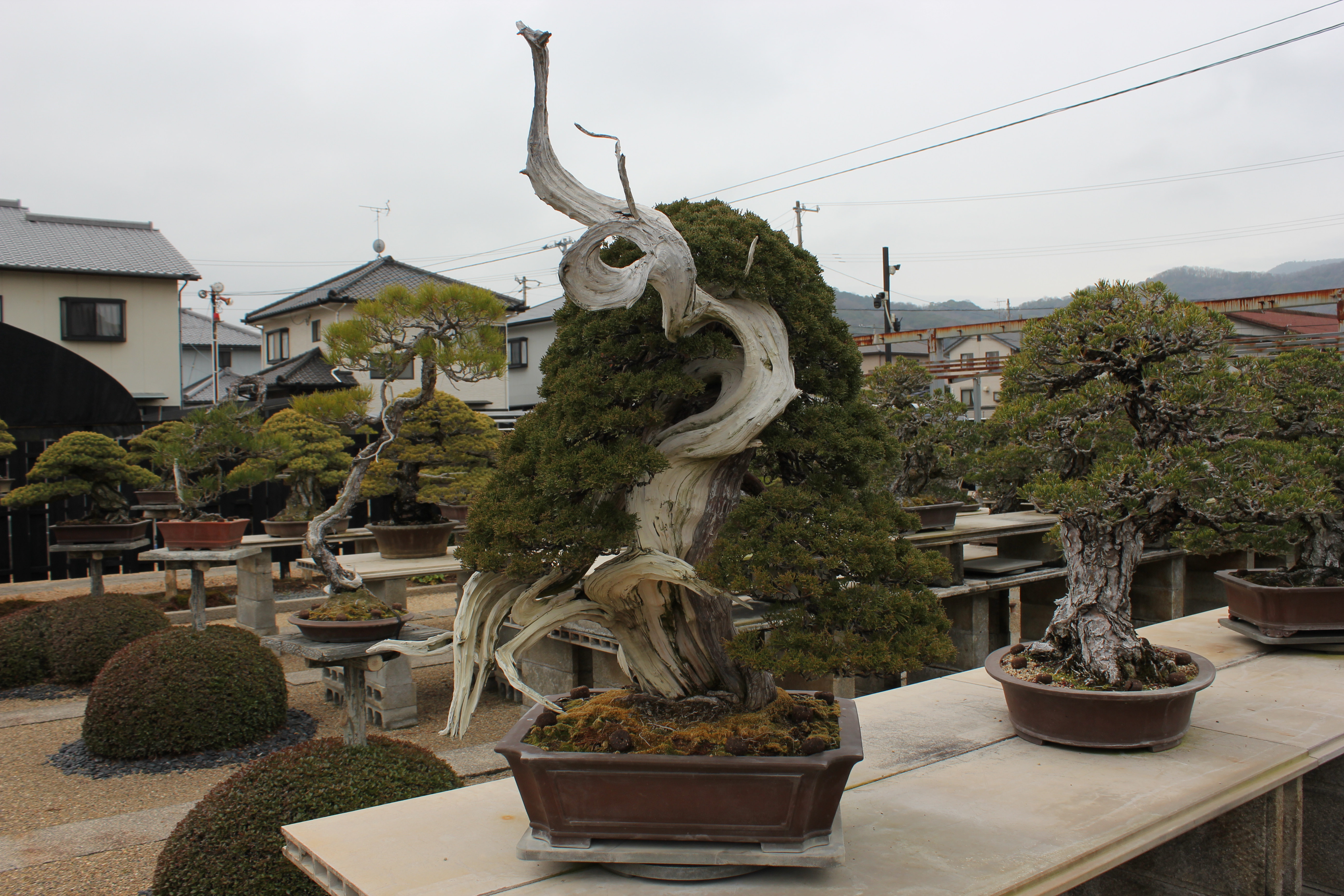
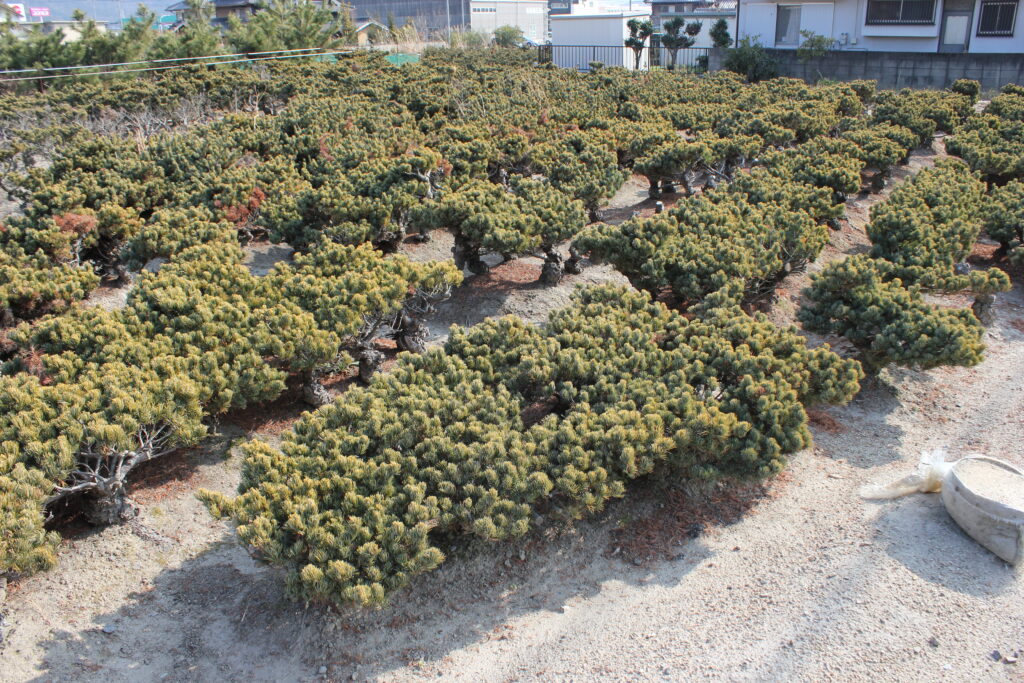
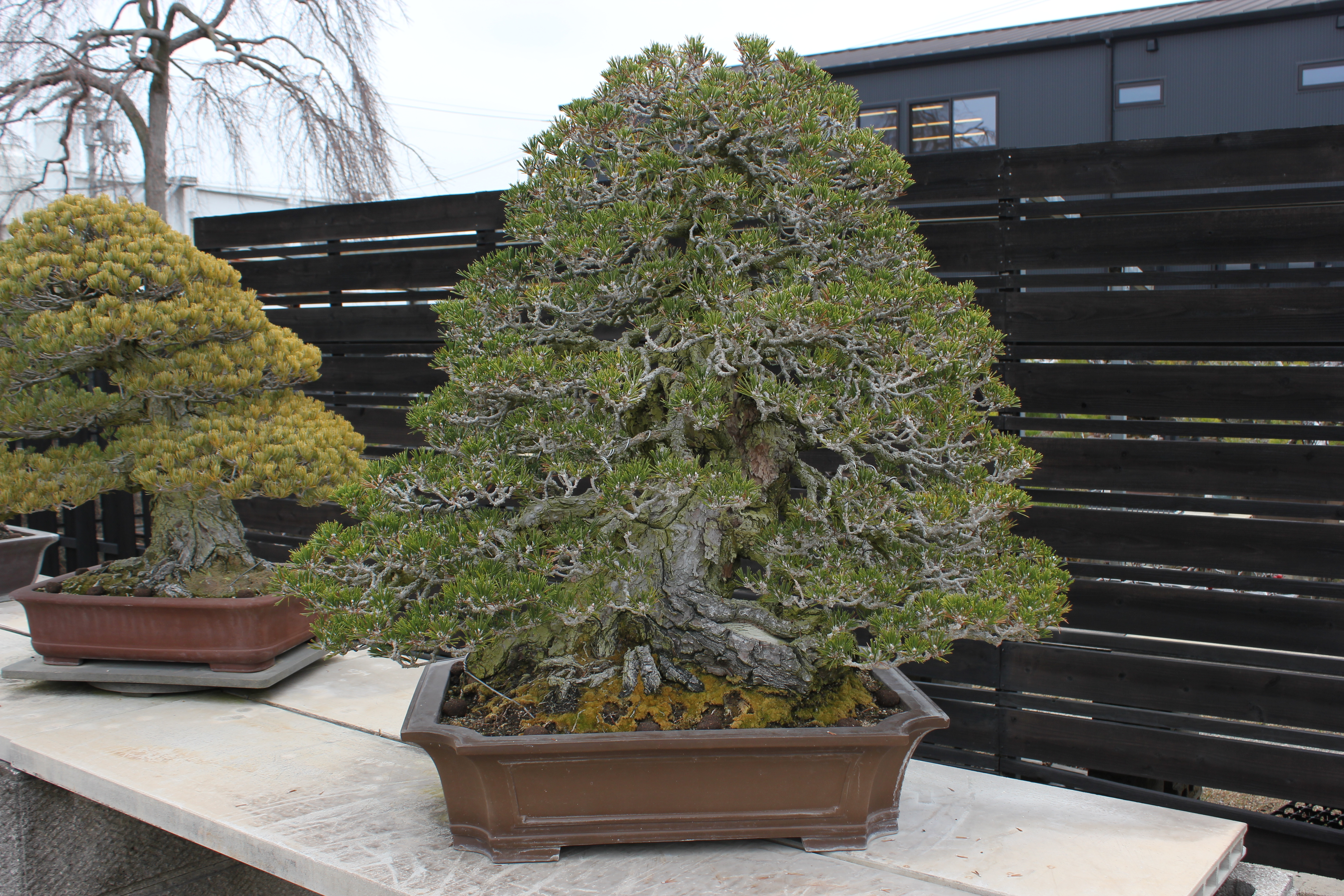
Ask most travelers where Japan’s bonsai comes from, and if they know any name at all, it’s usually Omiya, near Tokyo — home to the famous Omiya Bonsai Village and its public museum. Almost nobody, including most Japanese people outside the industry, knows that one of Japan’s most important production centers for pine bonsai sits quietly in my own prefecture, in two ordinary-looking neighborhoods on the edge of Takamatsu.
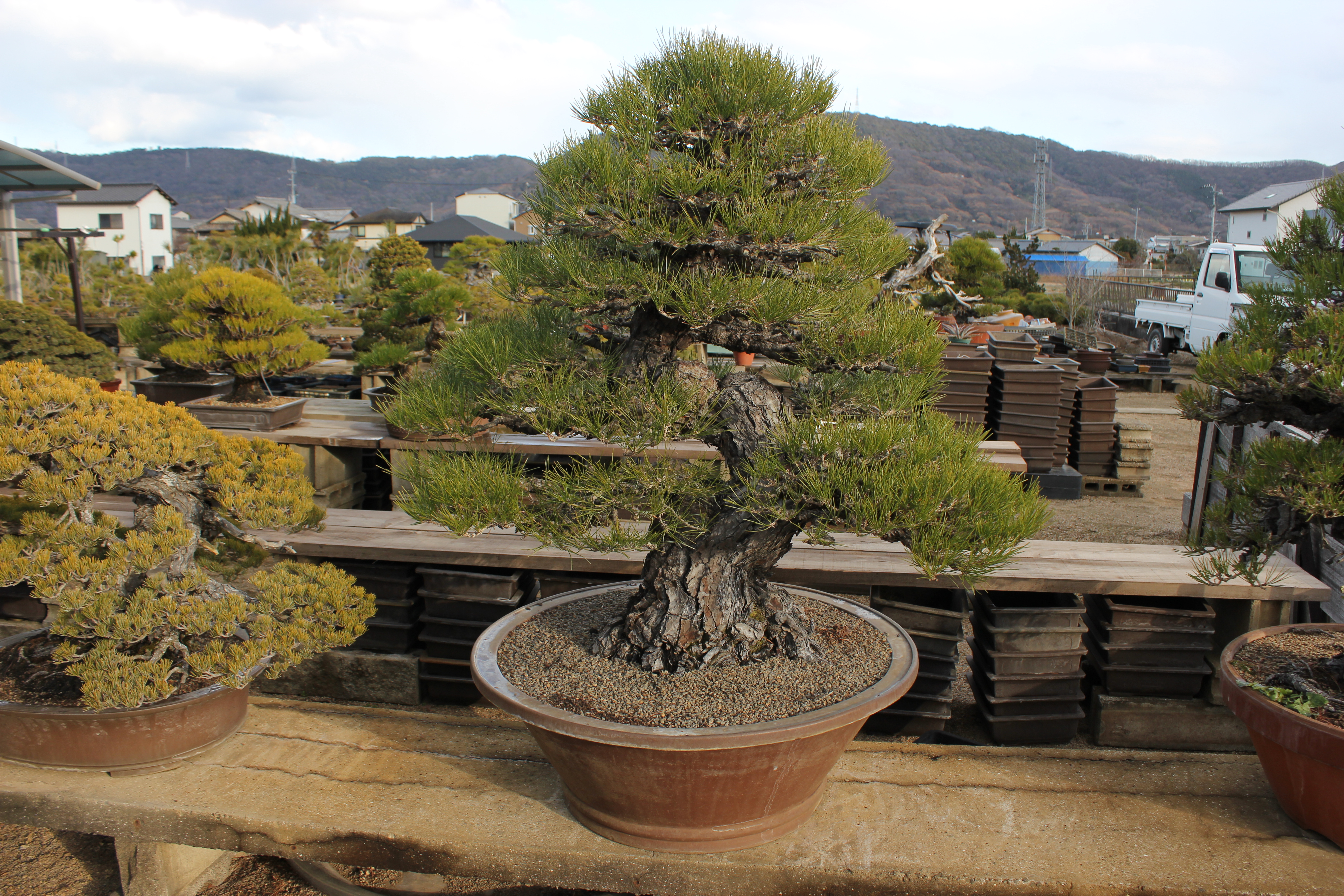
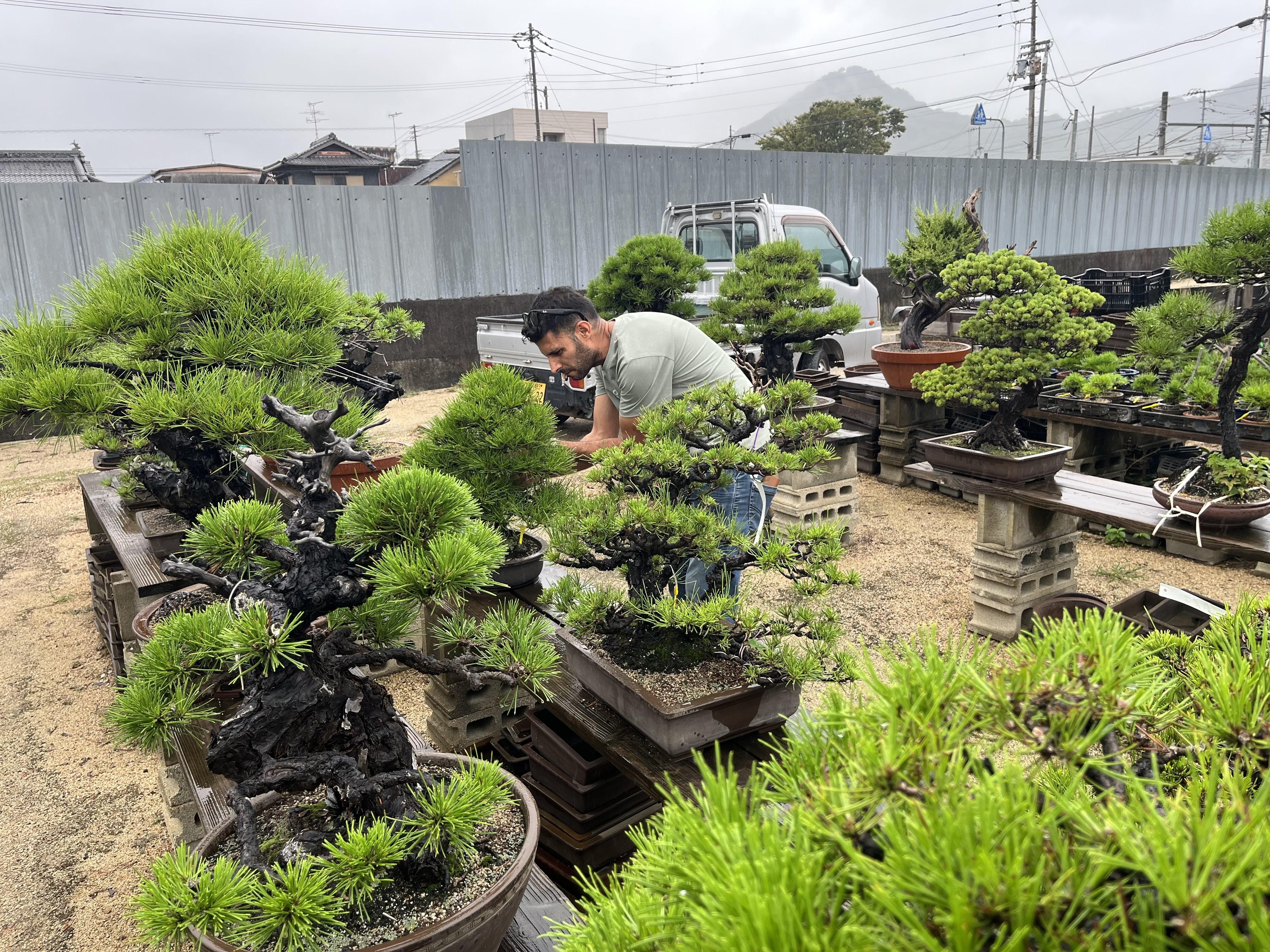
I’ve been working part-time at a bonsai nursery in Kinashi, one of those two neighborhoods, and the numbers behind this place surprised even me.
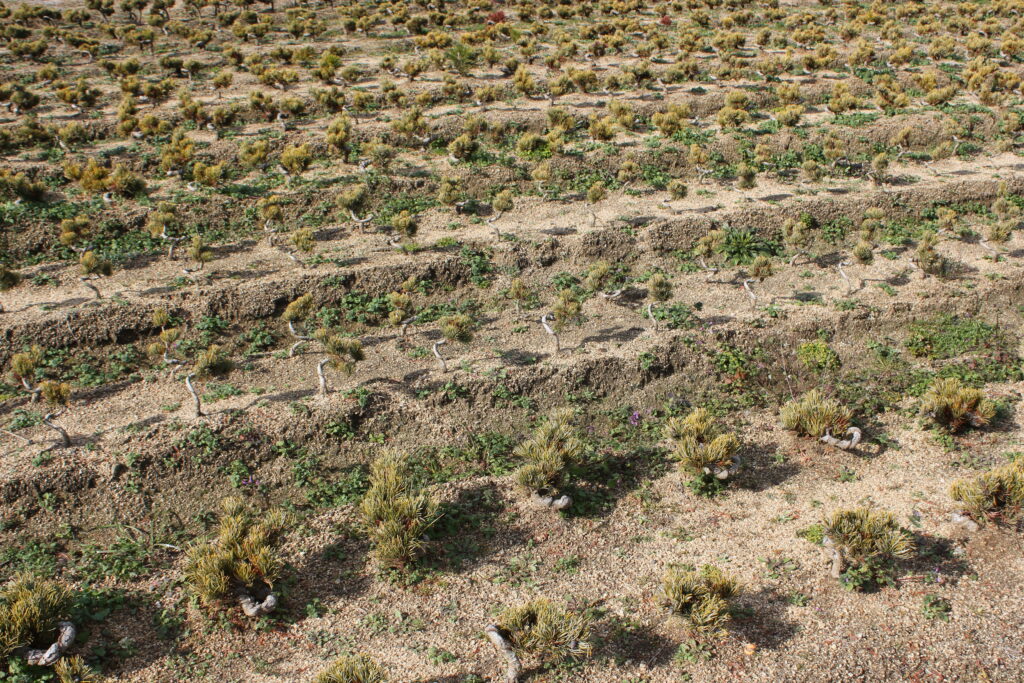
According to a JETRO (Japan External Trade Organization) case study on the Takamatsu bonsai industry, Kagawa Prefecture accounts for roughly 80% of Japan’s national pine bonsai production — making it, by a wide margin, the country’s leading production area. A separate academic study of the Kinashi and Kokubunji districts, based at Kagawa University, arrives at a very similar figure independently, putting pine bonsai from these two districts alone at “about eight-tenths” of national production.
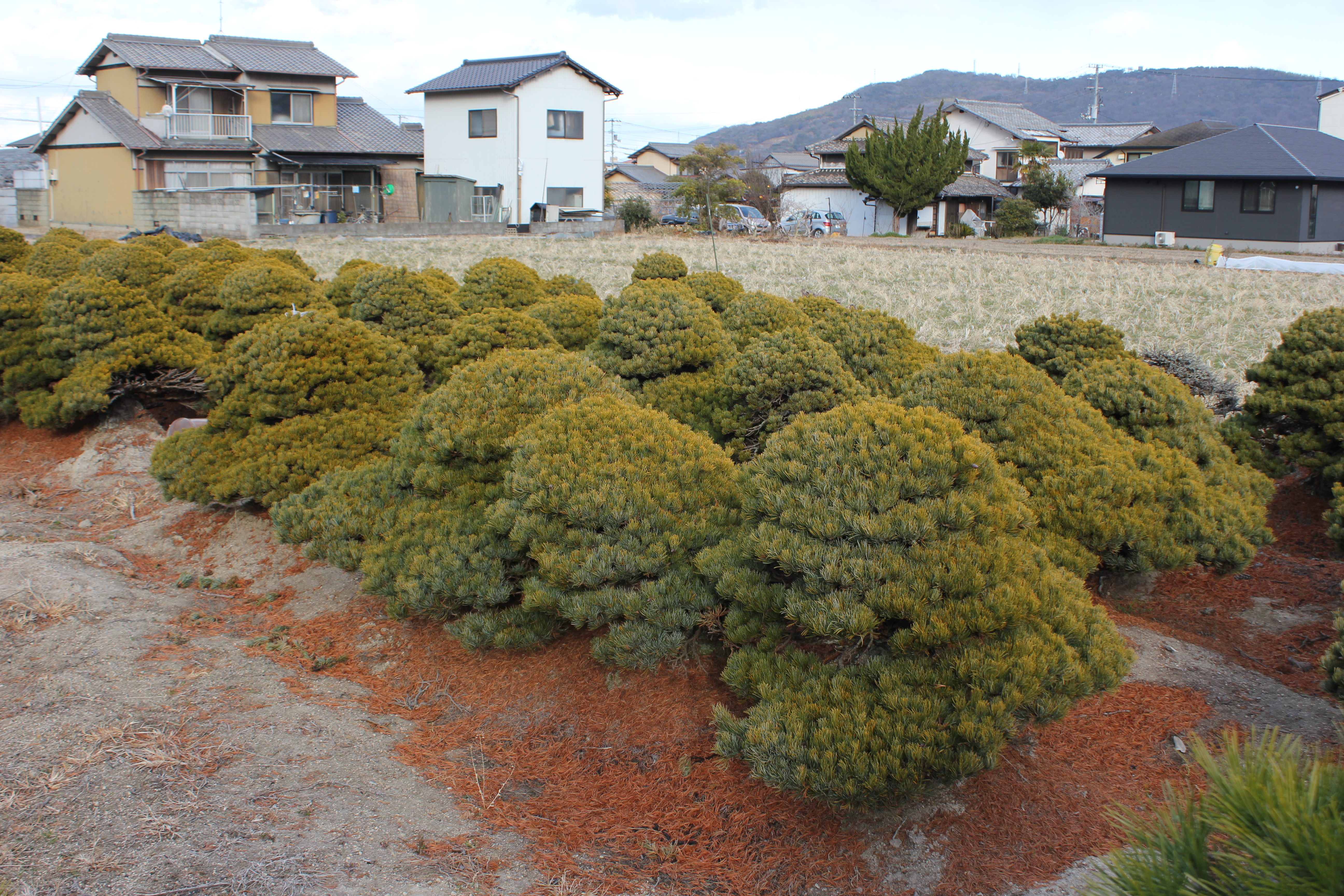
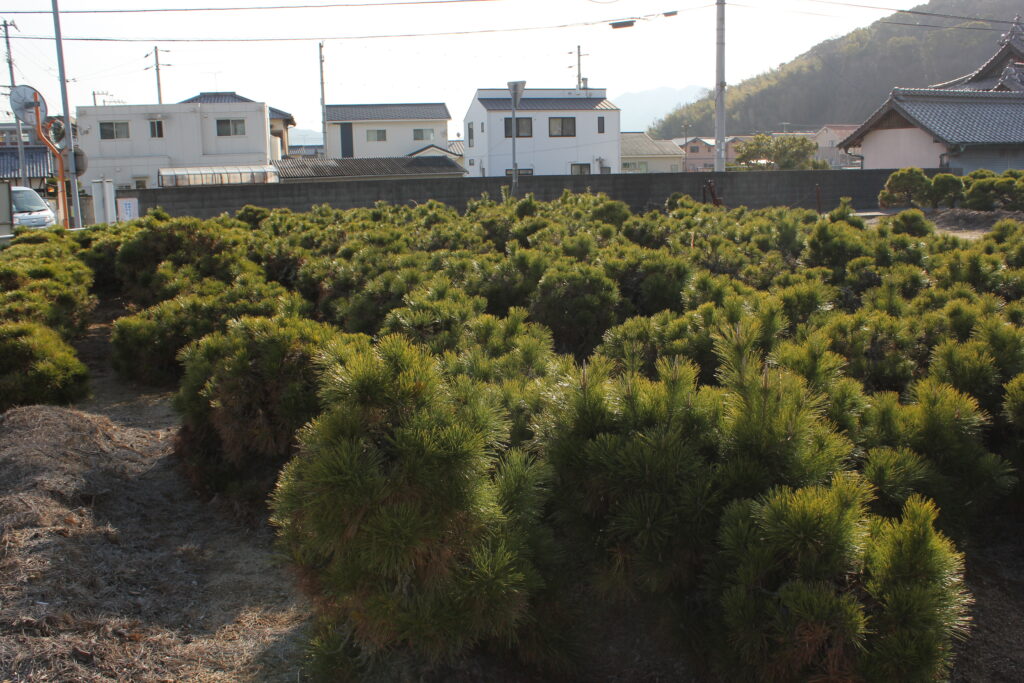
Two things stood out to me once I saw these numbers. First, this isn’t a niche craft village — it’s a genuine industrial cluster, concentrated almost entirely in two adjoining districts most tourists have never heard of. Second, almost none of that dominance is visible from the street. Drive through Kinashi or Kokubunji and you’ll mostly see ordinary farmland and low plastic greenhouses — nothing that announces “this is where most of Japan’s pine bonsai comes from.”
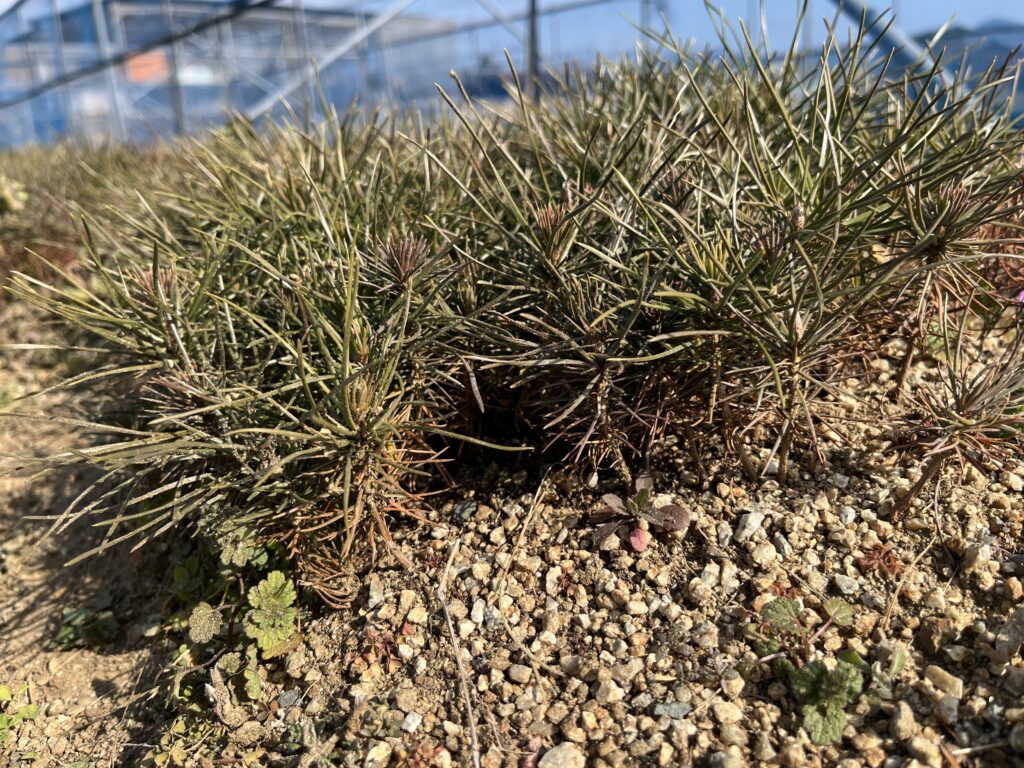
The explanation, once I heard it, made a lot of sense — and it has nothing to do with anyone deciding Kinashi shouldbecome a bonsai town.
According to the Kagawa University study, the topsoil in the Kinashi area is unusually sandy and well-draining, sitting over a layer of clay roughly 6 to 10 centimeters down. That combination is a poor fit for rice — Japan’s default crop almost everywhere else — because it doesn’t hold the standing water rice paddies need. But it’s close to ideal for pine: good drainage keeps the roots from rotting, which is one of the main things that kills a pine in cultivation. Add Kagawa’s relatively warm climate, low rainfall, and long hours of sunshine — all well documented for this part of Shikoku — and the growing conditions favor pine about as strongly as they work against rice.
The history suggests that geography and farming conditions, more than any special local passion for the art form, played the major role in why bonsai took root here. As I see it: farmers in Kinashi were dealt land that happened to be bad for the crop everyone else was growing, and good for one that most others weren’t.
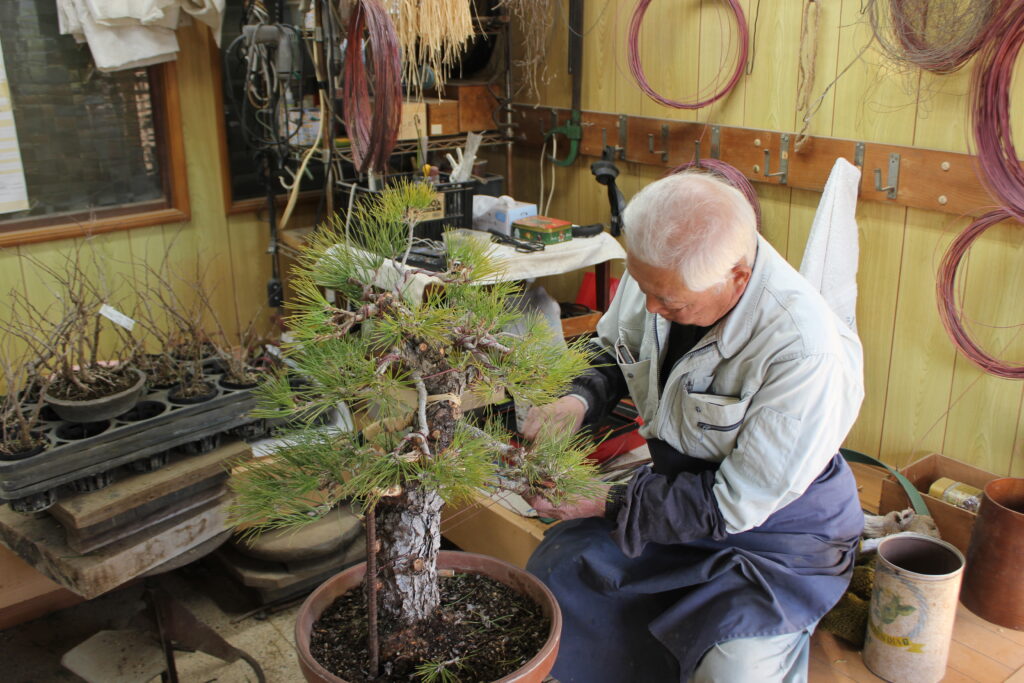
The Kagawa University research traces the industry’s roots back to Japan’s Edo period, specifically the Bunka era (roughly the early 1800s), naming two figures often credited with establishing the craft locally: Kinashi Jinzaburō in Kinashi and Suezawa Kiichi in Kokubunji.
What’s interesting is how it spread from there. This wasn’t a handful of specialist artisans working in isolation — it grew out of an existing farming community. As Japan’s commercial economy expanded, local farmers began taking up pine cultivation as a fukugyō, a side business alongside their regular farm work. Because the surrounding villages already had the social structure of an agricultural community — shared knowledge, cooperation between neighboring farms, generational continuity — cultivation techniques spread quickly from farm to farm, eventually growing into large-scale, collective production across both districts rather than staying with one or two specialists.
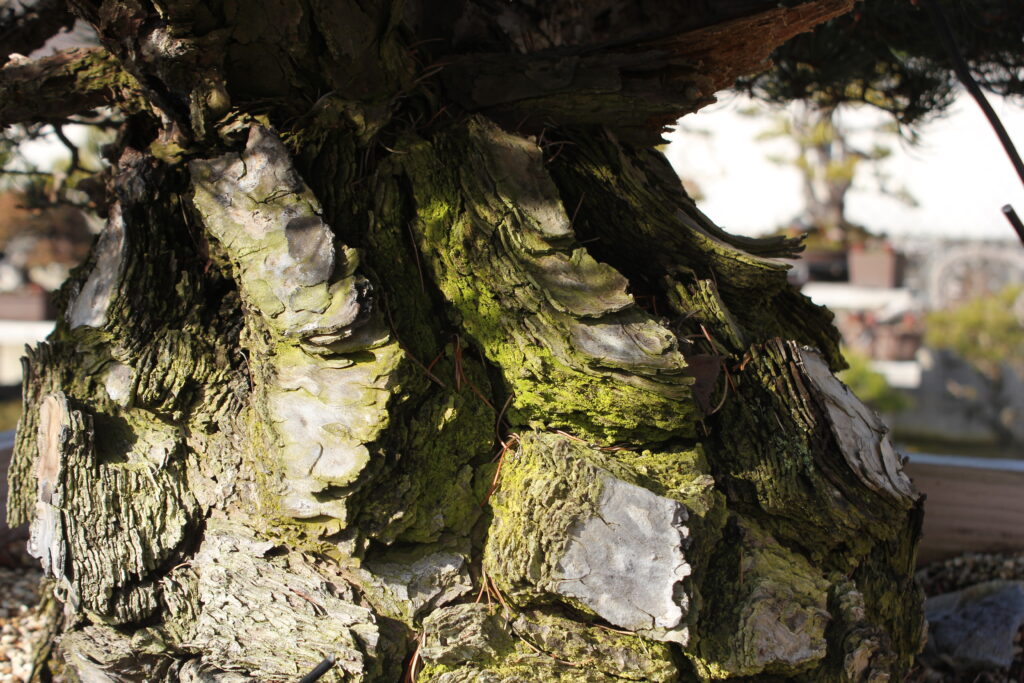
That history still shows in how the nursery where I work operates today: it doesn’t feel like a boutique workshop. It feels like a farm that happens to grow trees people display in their homes instead of vegetables they put on the table.
There’s also a local story I’ve heard repeated by more than one person in the industry — that the area’s position along the pilgrimage route to Kotohira-gu, one of Shikoku’s most visited shrines, helped bring early trade and buyers through the region. I haven’t found this specific claim confirmed in either of the sources above, so I’ll flag it honestly as local lore rather than documented fact — but given how much foot traffic that pilgrimage route has carried for centuries, it’s a plausible piece of the puzzle even if I can’t fully verify it yet.
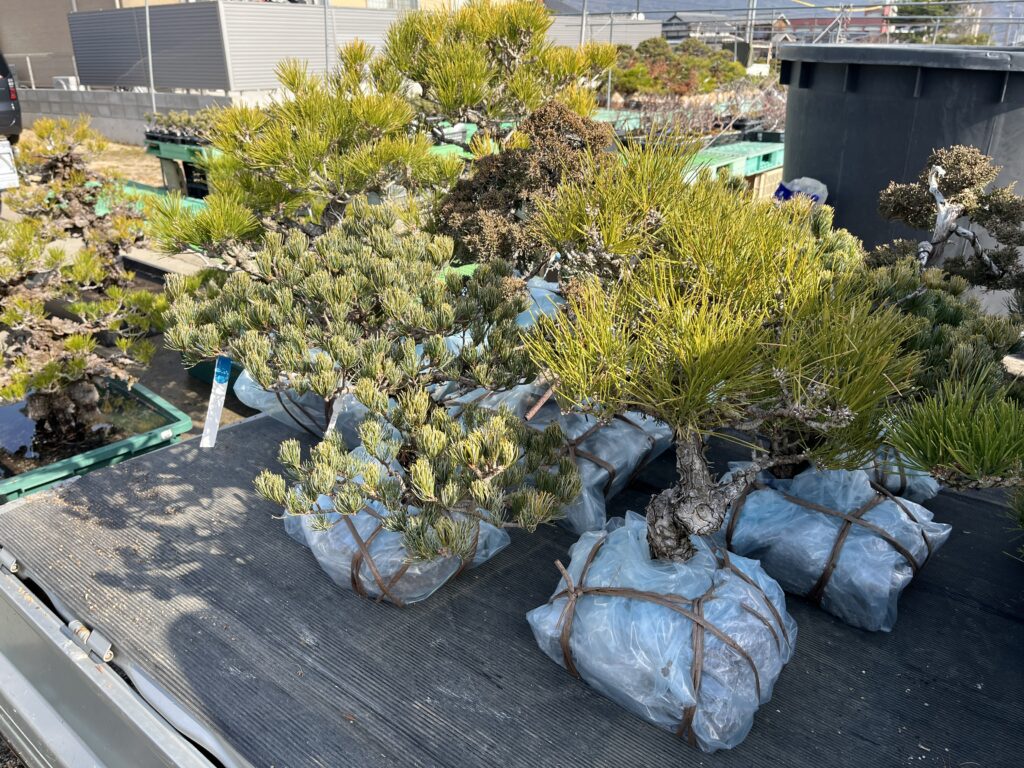
This also isn’t a shrinking, purely traditional trade holding on out of nostalgia. The JETRO case study notes that exports of bonsai and related plants produced in Kagawa roughly doubled over a recent three-year period, with most of that overseas demand coming from Western Europe, China, and Taiwan. And this quiet agricultural industry is no longer purely domestic — trees grown in these fields now reach buyers overseas, even as domestic demand within Japan has been shrinking.
I’m not telling you this so you can recite an export statistic at dinner. I’m telling you because it changes what you’re actually looking at if you ever walk through Kinashi or Kokubunji. This isn’t a preserved cultural district built for visitors, and it isn’t a single famous garden you can snap a photo of and move on. It’s a working agricultural industry, hiding in plain sight in ordinary-looking fields on the edge of a mid-sized Japanese city. You’re not really visiting a bonsai attraction — you’re stepping into a living production landscape.
That’s also exactly why it’s easy to miss if you don’t know what you’re looking at, and why I think it’s worth understanding a little of the history before you see it in person.
But understanding why bonsai production took root here is only the beginning. The trees themselves have a much stranger history than the land they grow on — including pines shaped not by nurseries at all, but by generations of islanders cutting branches for firewood. That’s the story I want to tell next.
Sources: JETRO case study, “Takamatsu Bonsai” (jetro.go.jp/case_study/takamatsu_bonsai.html); Kagawa University graduation thesis on the Kinashi bonsai industry (ec.kagawa-u.ac.jp). The Kotohira-gu pilgrimage connection is presented above as an oral, locally repeated account, not a claim confirmed by either source.
Want to see this working landscape for yourself? I offer private bonsai experiences in Takamatsu, including visits to working nurseries and opportunities to meet local growers and hear about the trees directly from the people who grow them. [Message me on WhatsApp] to arrange a visit.