"Tassui ga wa Ikan": Why Kochi Takes Its Drinking as Seriously as Its History
Kurokawa
Attractive Trip in Shikoku
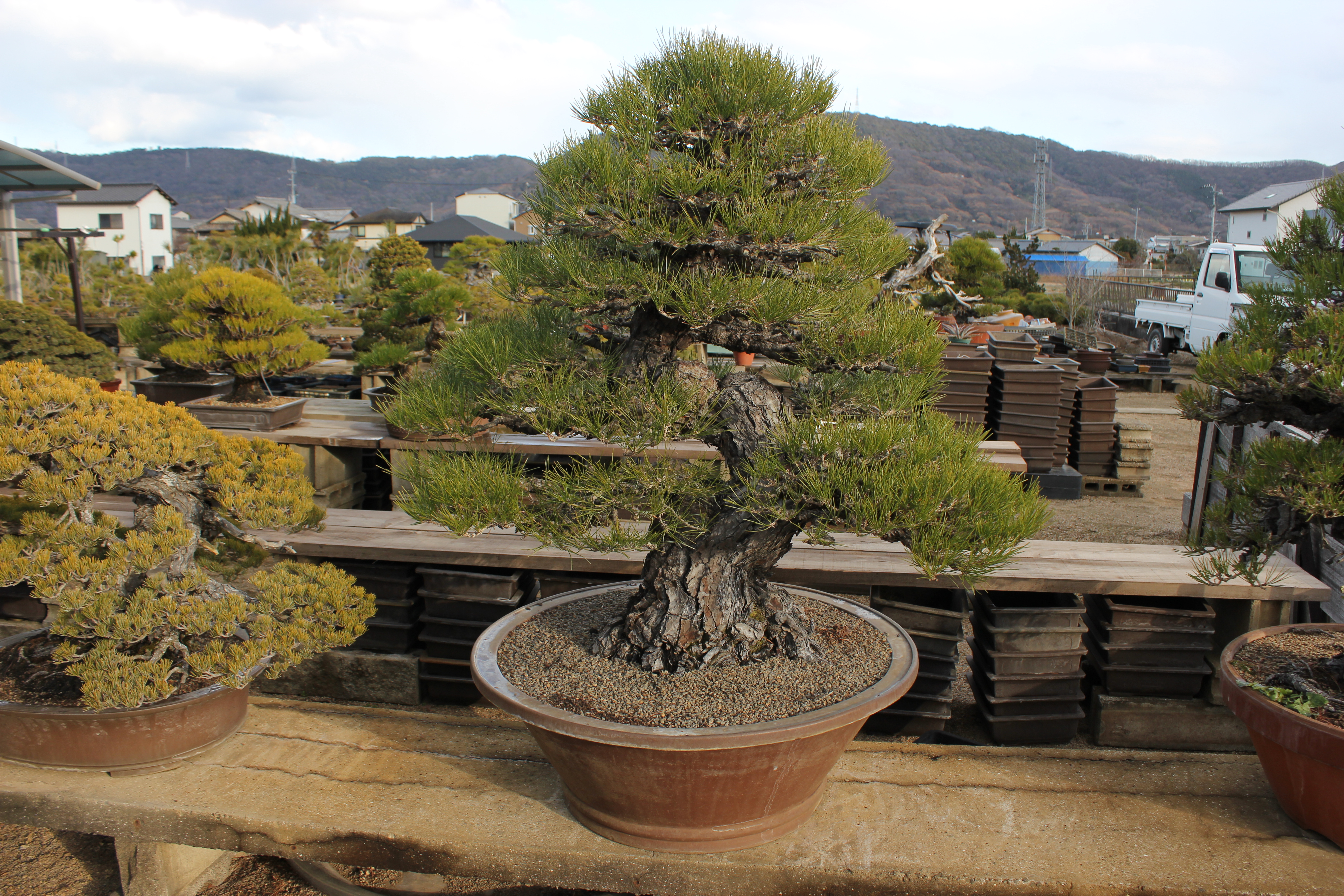
In my last post, I explained why Takamatsu’s soil and farming history turned two ordinary districts into a major center of Japan’s pine bonsai production. But the land is only half the story. Some of the most valuable trees growing here today weren’t shaped by nurseries at all. They were shaped by island families who needed to cook dinner and heat their bathwater.
If you know anything about bonsai material, you’ve probably heard the word yamadori (山採り): trees collected from the wild rather than grown from scratch. Decades of harsh conditions give them thick, aged trunks that no nursery can fake quickly, which is why collectors prize them.
I had never heard the word shimagi (島木) before I started working at a bonsai nursery in Kinashi. The characters mean “island” and “tree.” According to several growers I spoke with in the area, the older generation used shimagi to distinguish certain island-grown material from ordinary yamadori, and regarded it as particularly valuable. Today that distinction has mostly faded, and wild-collected material of any kind tends to be called yamadori. I use the Japanese term here because there isn’t a simple English equivalent for the distinction the growers were describing, and once you hear why it existed, it’s hard to forget.
I first heard this story at Oro Kyokushoen, a long-established nursery in Kinashi and the birthplace of Kyokuryu, a black pine cultivar. I stopped by during a break from work at the nursery where I was working part-time.
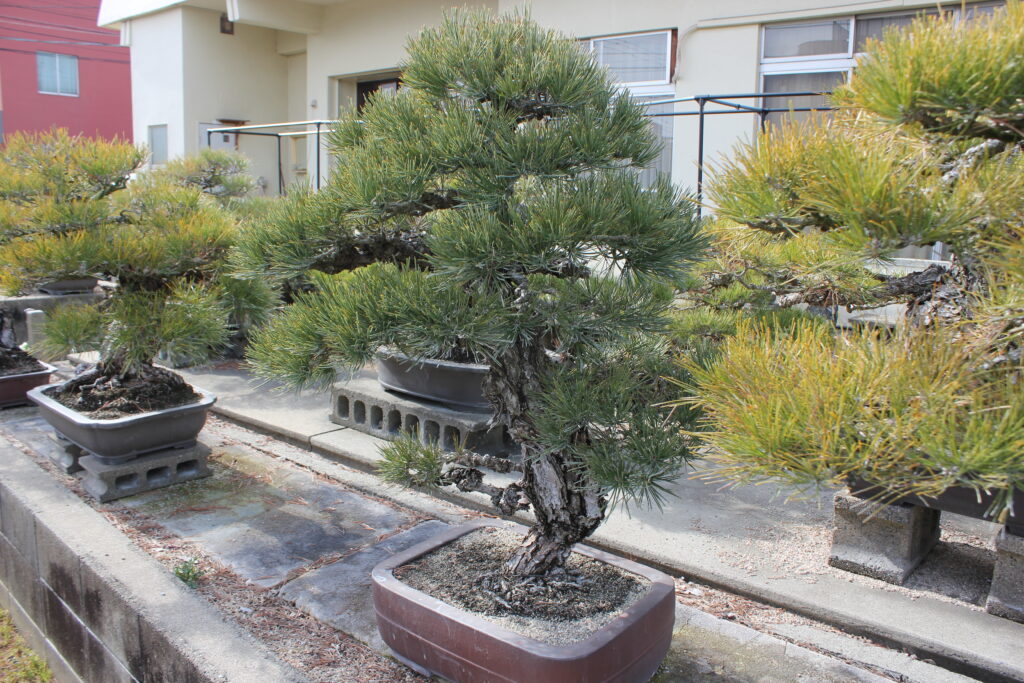
Before gas and electricity reached the smaller islands of the Seto Inland Sea, islanders relied on wood for everyday fuel. They would cut branches from the pines growing wild on the island hillsides, carry them home, and burn them in the kamado (a traditional clay cooking stove) or use them to heat water for the bath. The same trees were cut back again and again, year after year.
Repeated cutting kept many of these pines from developing into tall, straight trees. According to the growers, many stayed only about waist height, while their trunks kept thickening and aging. In other words, without anyone intending it, generations of islanders were doing to these trees roughly what a bonsai grower spends decades trying to do on purpose.
That’s why the growers I spoke with are careful to say these weren’t truly “natural” trees. They were wild pines, but their shape was the product of people’s daily lives.
According to the owner of Oro Kyokushoen, much of the island material in the nursery’s fields came from the Ieshima Islands, off the coast of Hyogo Prefecture. As island life modernized and people no longer needed the pines for fuel, growers went out to buy them, sometimes on the terms of “we’ll pay this much for every pine on this hill,” as he put it. They brought the trees back in large numbers, shared them among fellow growers, and planted them in their fields to be trained over the following decades.
I can’t give you exact dates or prices for these purchases. That detail comes from one grower’s memory of how his predecessors worked, not from a written record, and I’d rather tell you that plainly than guess.
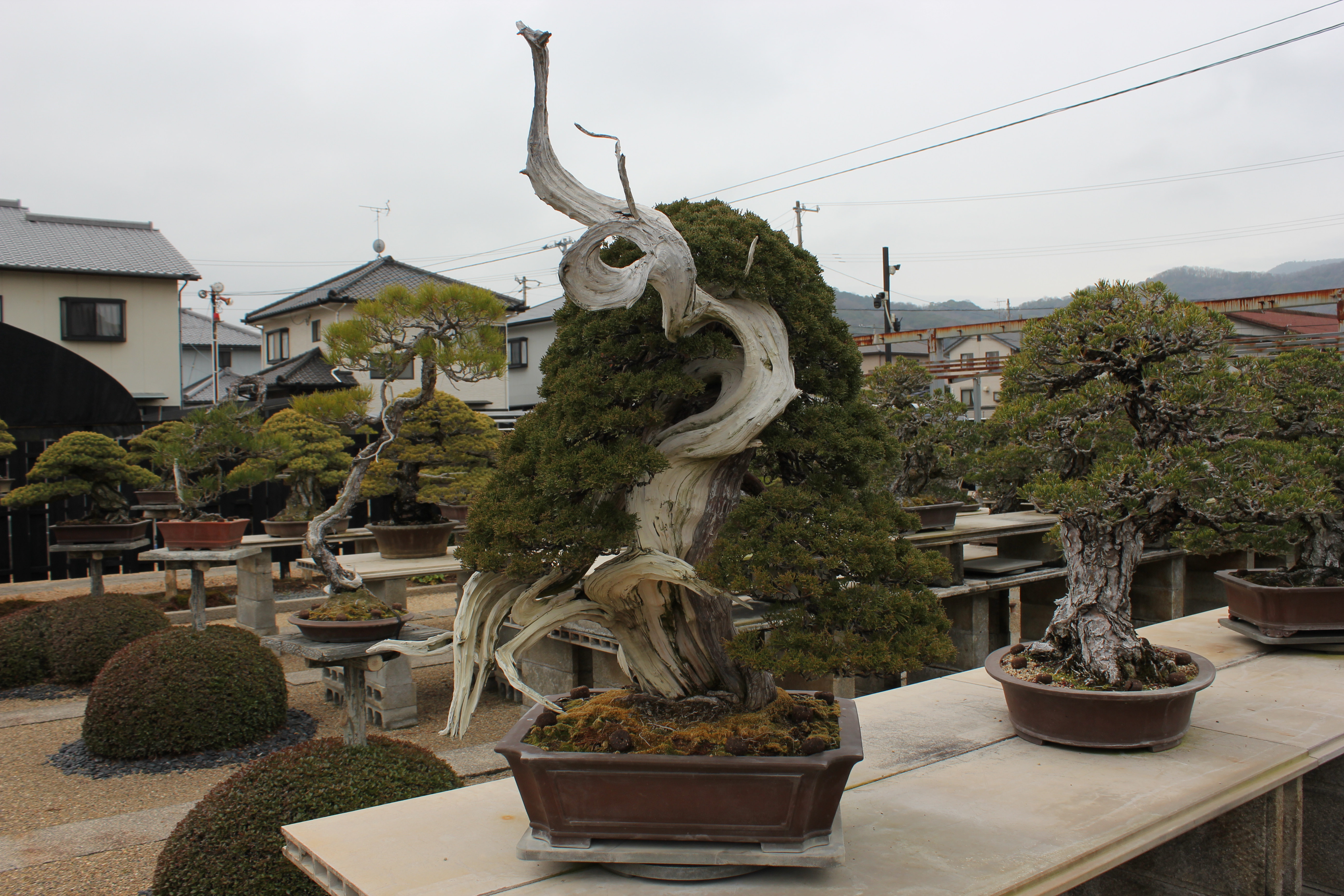
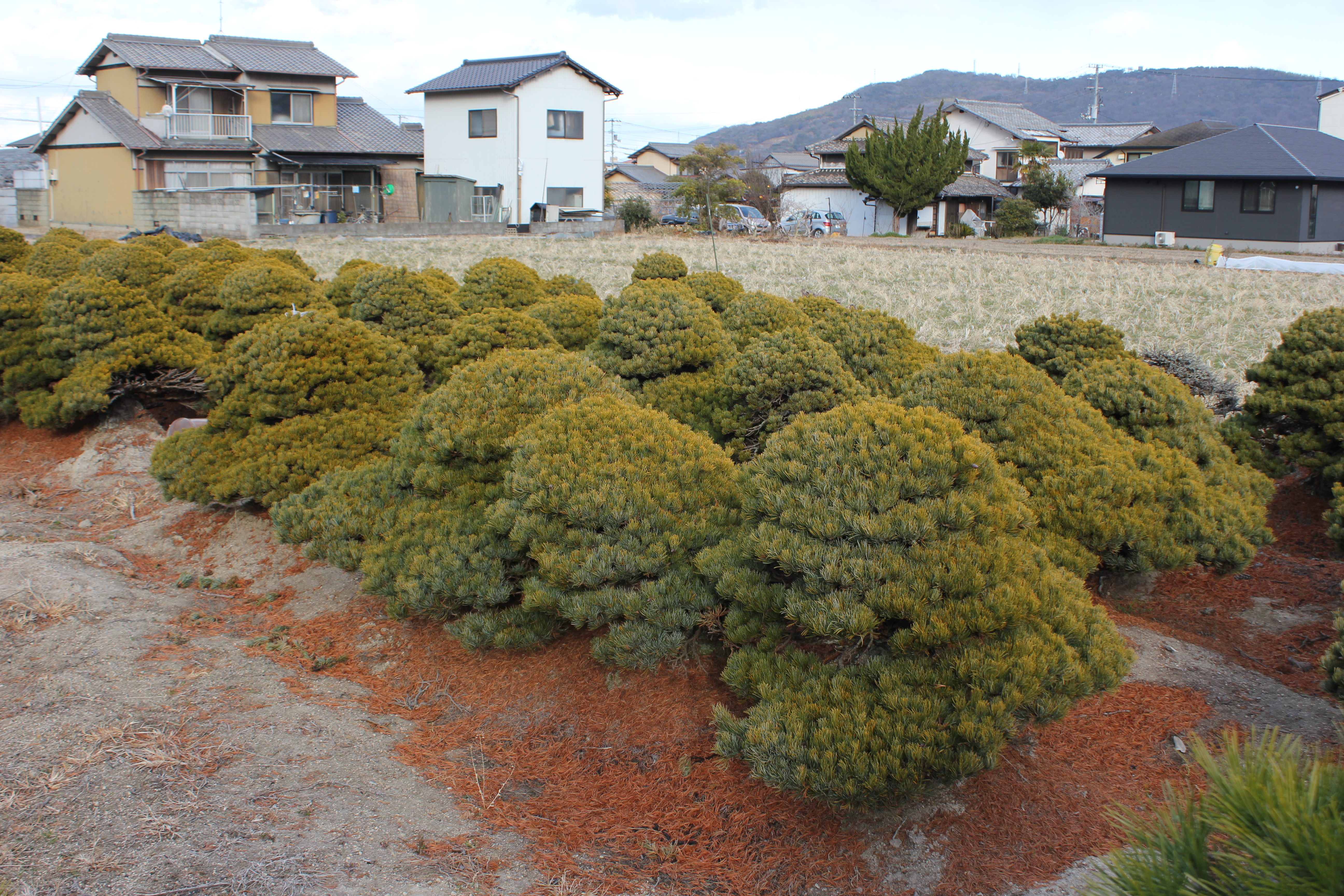
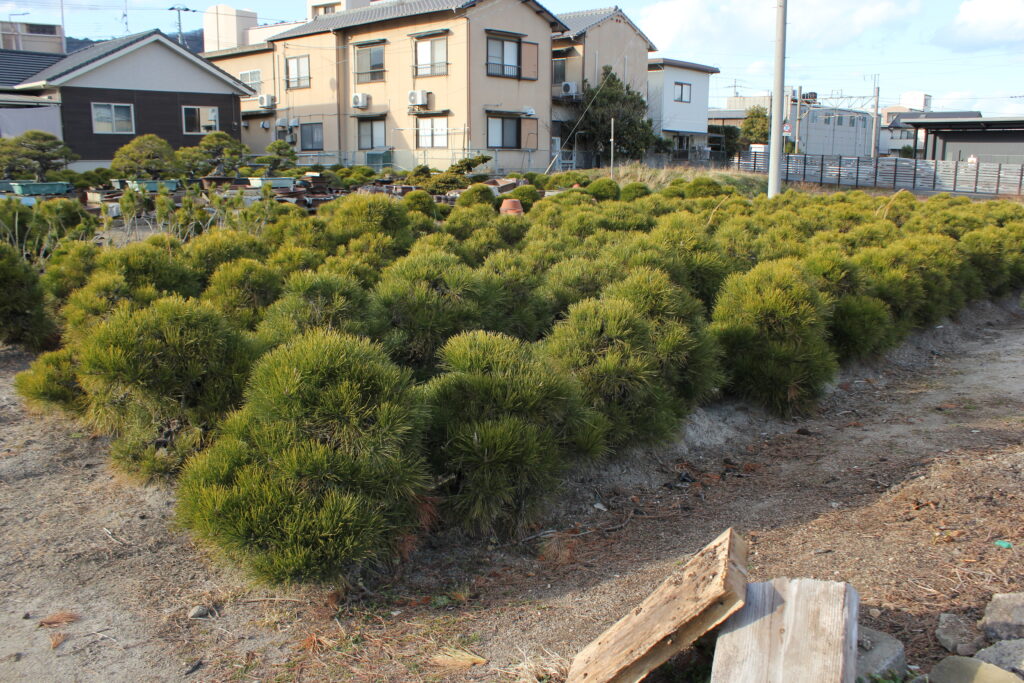
The moment the story became real for me came later that same day, at Kitadani Yoseien, another nursery in the neighborhood run by the Kitadani family, whose son is well known for his popular bonsai YouTube channel. Mr. Kitadani’s father showed me around. The nursery has thousands of pines in its fields, and among growers in Kinashi and Kokubunji, it is widely regarded as having the largest collection of mountain- and island-collected material in the area. Its most valuable tree is a large black pine from Kitagishima, an island off the coast of Okayama Prefecture, which the nursery estimates to be around 200 years old.
When I looked closely at the trunk, I could see old scars where branches had been cut, long since healed over. Having heard the fuel-cutting story only hours earlier, I realized I was looking at the physical record of that history: marks left by islanders who were simply gathering firewood.
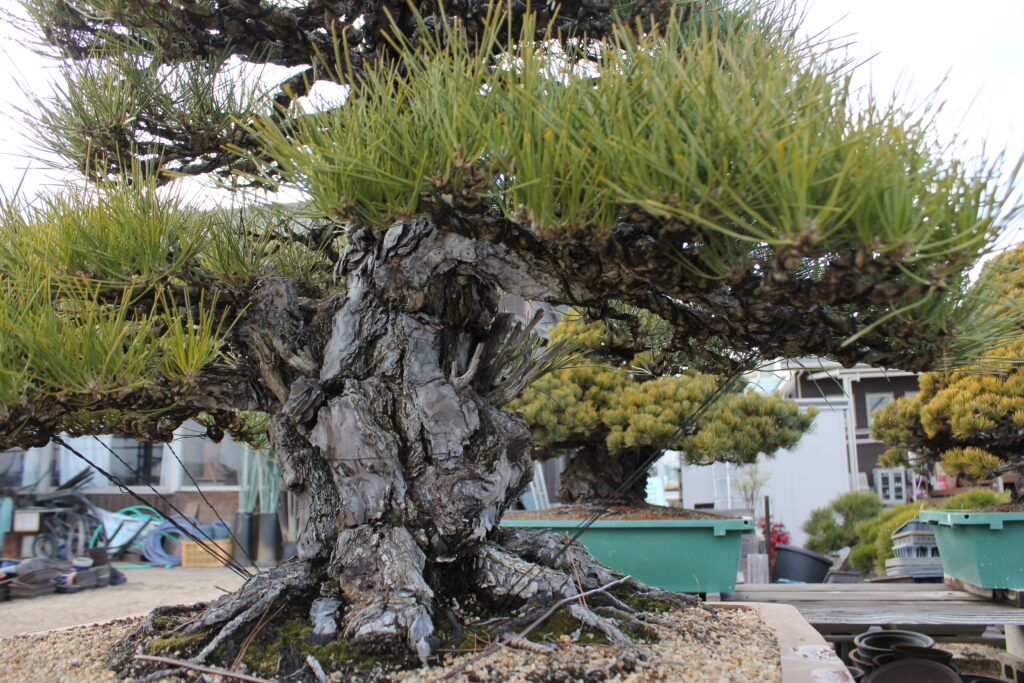
How do you estimate the age of a tree like this? There’s no planting record for a wild pine, but there are clues.
The first is living memory. According to Mr. Kitadani’s father, elders on the island said the tree was already standing there when they were children, and that they themselves used to cut its branches for firewood. That was shortly after the Second World War. If the tree was already large enough to be a regular source of firewood back then, it had been growing for a long time before that.
The second is the tree itself. Experienced growers use features such as trunk development and bark character as clues when estimating the age of an old pine, though these are estimates rather than precise measurements. I’m no expert, but even I could see the difference. The field has plenty of pines that are several decades old, and next to them, the thick, deeply fissured bark of this tree had a presence in a different class entirely.
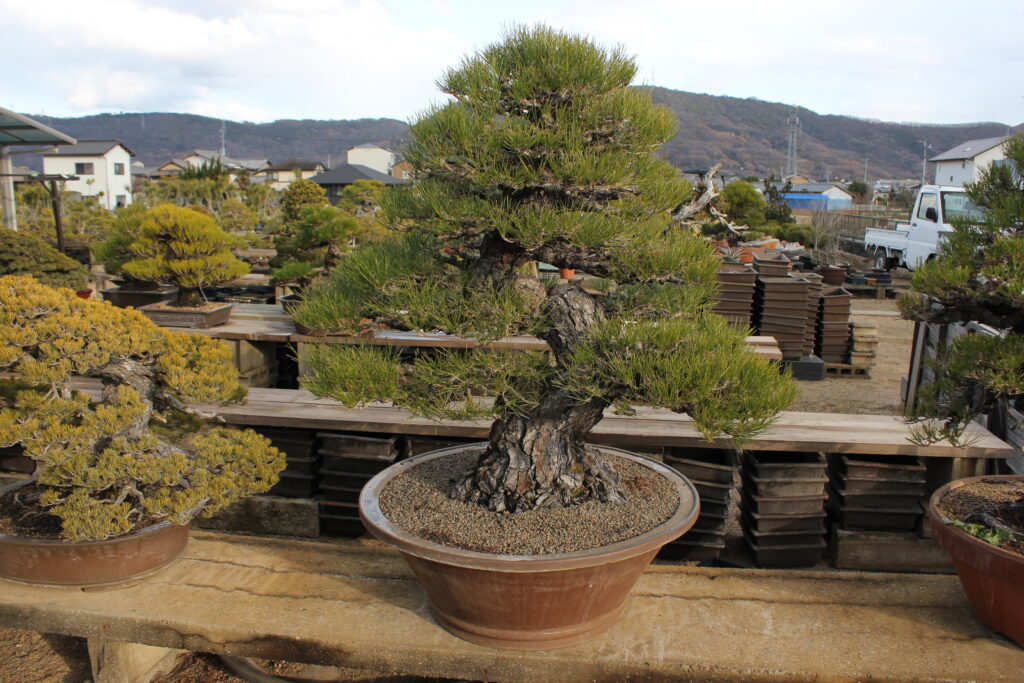
Taken together, the stories from the island and the tree’s appearance are consistent with the estimate of around 200 years I was given.
Standing next to that tree with the story in my head was one of the more memorable moments I’ve had in this work.
Here’s the part that makes shimagi special, and a little sad.
Pines still grow on those islands today. But since no one cuts them for fuel anymore, they’ve grown the way pines normally do: tall, thin, and straight. As I was told at Kitadani Yoseien, they generally no longer have the characteristics that growers look for in this kind of bonsai material.
The pines themselves haven’t disappeared. What has disappeared is the way of life that shaped them. The conditions that created shimagi, a subsistence practice repeated over generations, no longer exist, so the supply of this particular kind of old island material is effectively finite. When I think of it that way, the scars on that old trunk look less like damage and more like a record of a way of life that has vanished from Japan.
This is one reason I think Takamatsu’s bonsai districts are worth visiting in person. You can read about shimagi here, but seeing a tree whose shape was set by island kitchens generations ago is a different experience. Most of these trees are in working fields, not display gardens, and many nurseries in the area sell only to the trade. Oro Kyokushoen is one of them: it sells to professionals rather than the public, but visitors can look around, and what the nursery identifies as the original parent tree of the Kyokuryu cultivar still grows there. Kitadani Yoseien, home of the old Kitagishima pine, is another.
But here’s the catch. Walk into either field on your own and you’ll see thousands of pines, and nothing tells you which one came from an island, which one carries the old fuel-cutting scars, or where on the trunk to look. The tree believed to be around 200 years old doesn’t have a sign on it. This is exactly the kind of thing I look for when I take visitors into the bonsai districts: not just showing you a nursery, but helping you understand what you’re looking at.
In the next post, I’ll turn to the tree that many growers here consider the hardest to get right: the five-needle pine, and why almost none of them are grown from seed.
Source note: The history in this article comes from conversations at two nurseries in Kinashi, Oro Kyokushoen and Kitadani Yoseien, describing what the growers learned from earlier generations. I haven’t found a written source that documents the island fuel-cutting practice specifically in connection with bonsai, so please read it as firsthand oral testimony from people in the industry rather than as documented history. The 200-year age is the nursery’s estimate, supported by the island elders’ recollections and the tree’s appearance, not a measured figure.
Want to see these trees for yourself? I offer private bonsai experiences in Takamatsu, including visits to working nurseries and opportunities to meet local growers and hear about the trees directly from the people who grow them. [Message me on WhatsApp] to arrange a visit.