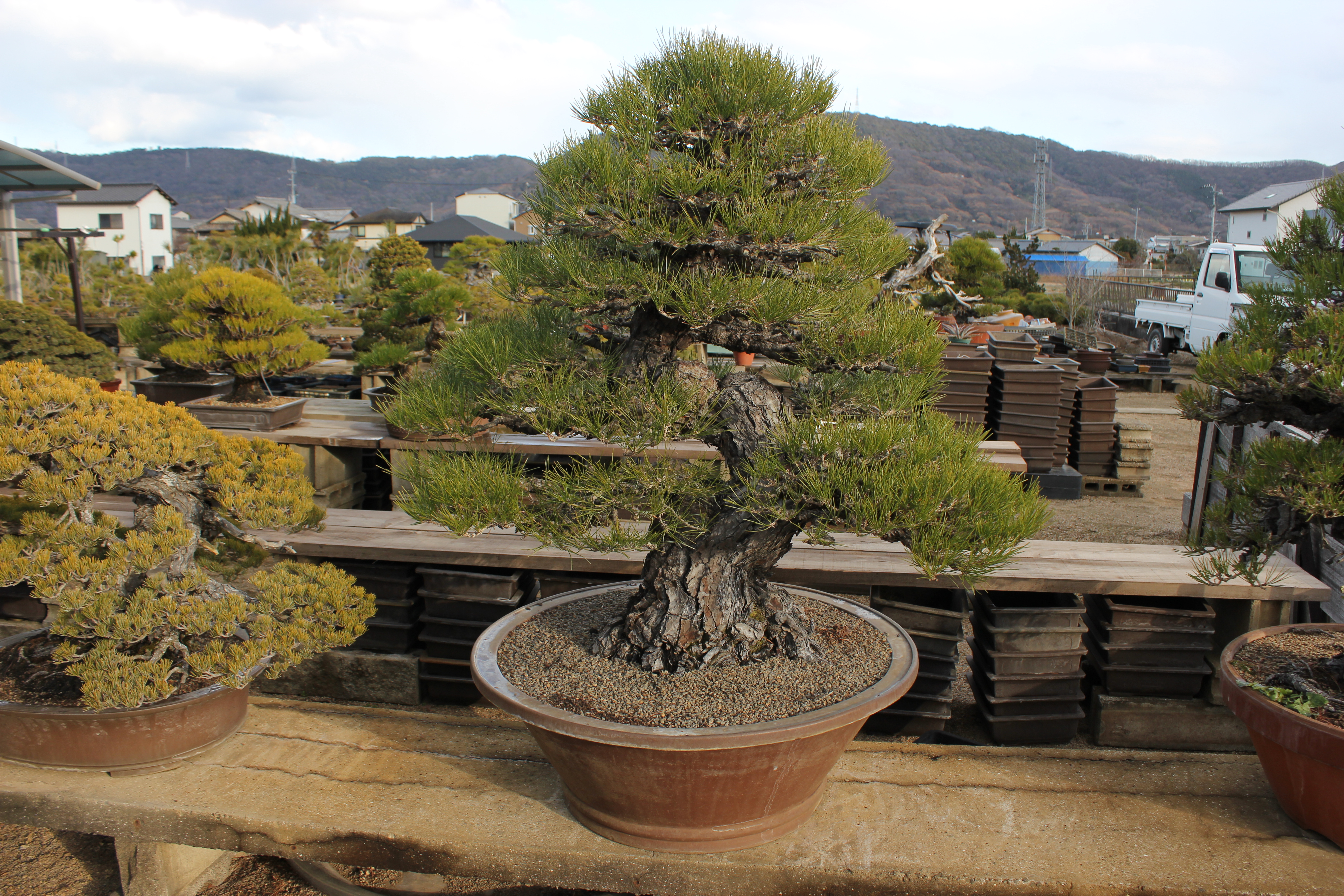
Inside a Takamatsu Bonsai Nursery: The Work Visitors Rarely See
Kurokawa
Attractive Trip in Shikoku
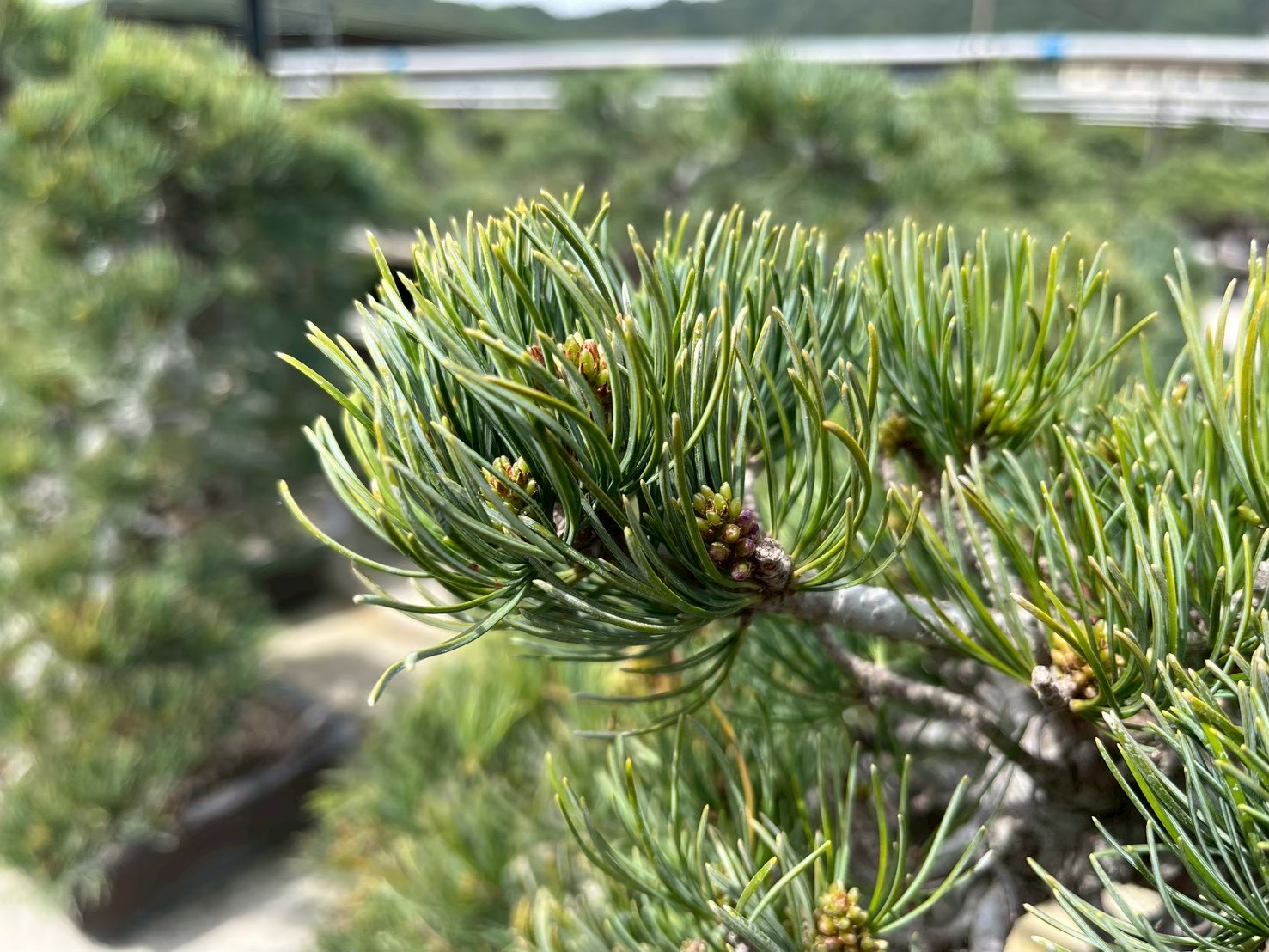
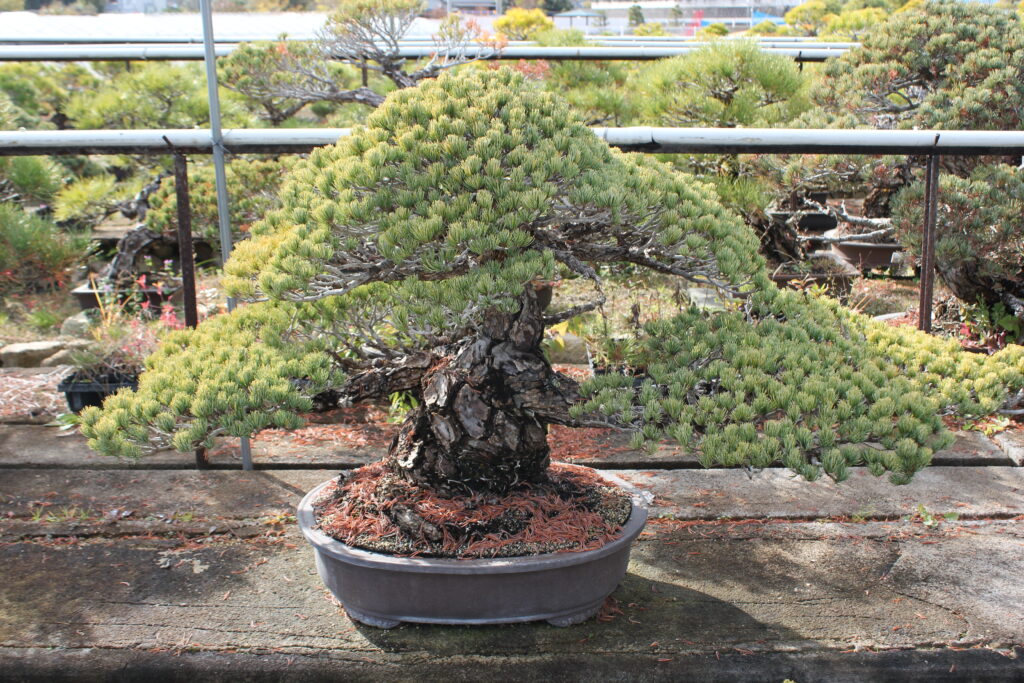
In my last post, I wrote about shimagi, the island pines whose shape was set by generations of firewood cutting. Those trees came to Takamatsu ready-made. This post is about the opposite kind of tree: one that growers here have to build almost from scratch, over many years, with no guarantee it will survive.
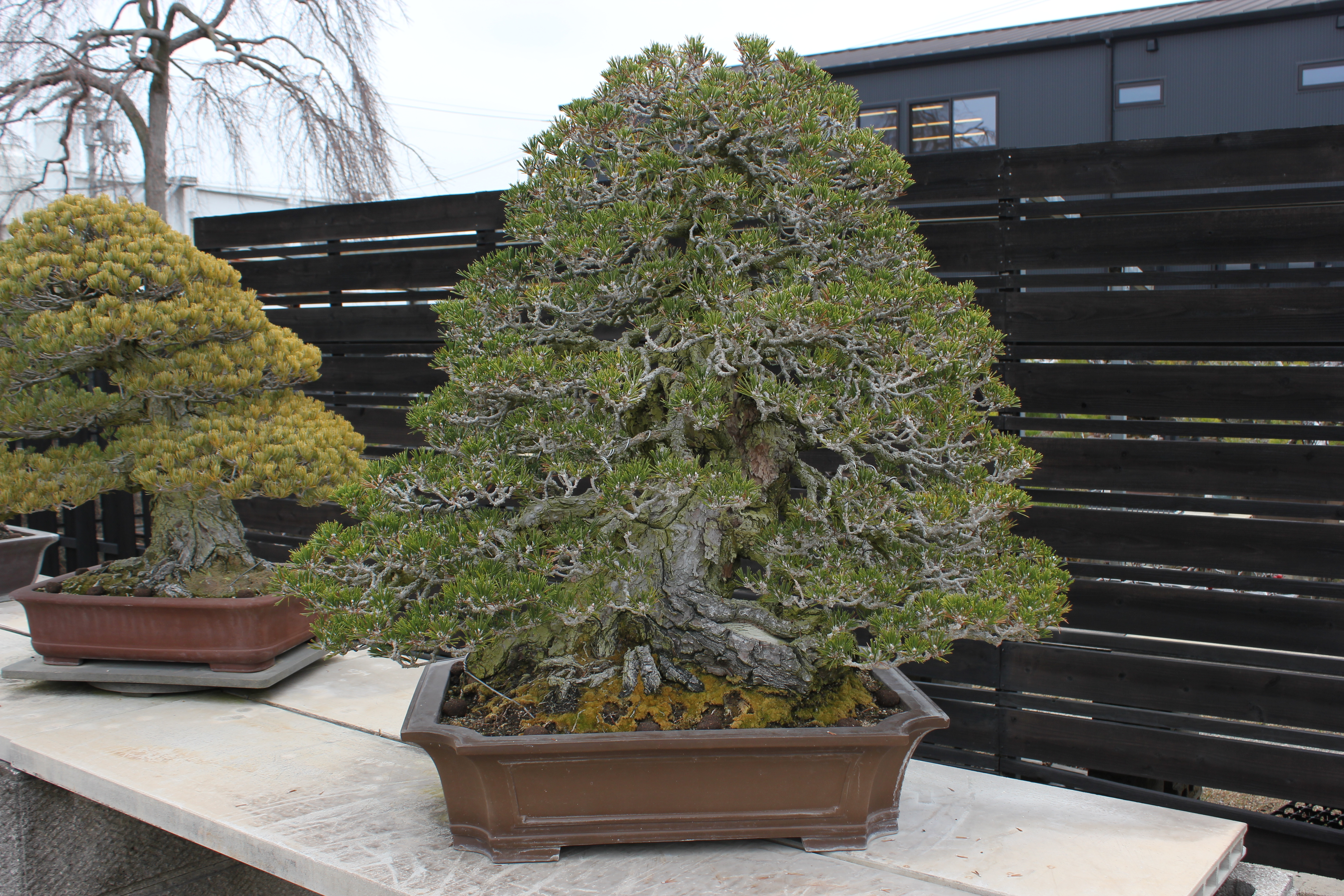
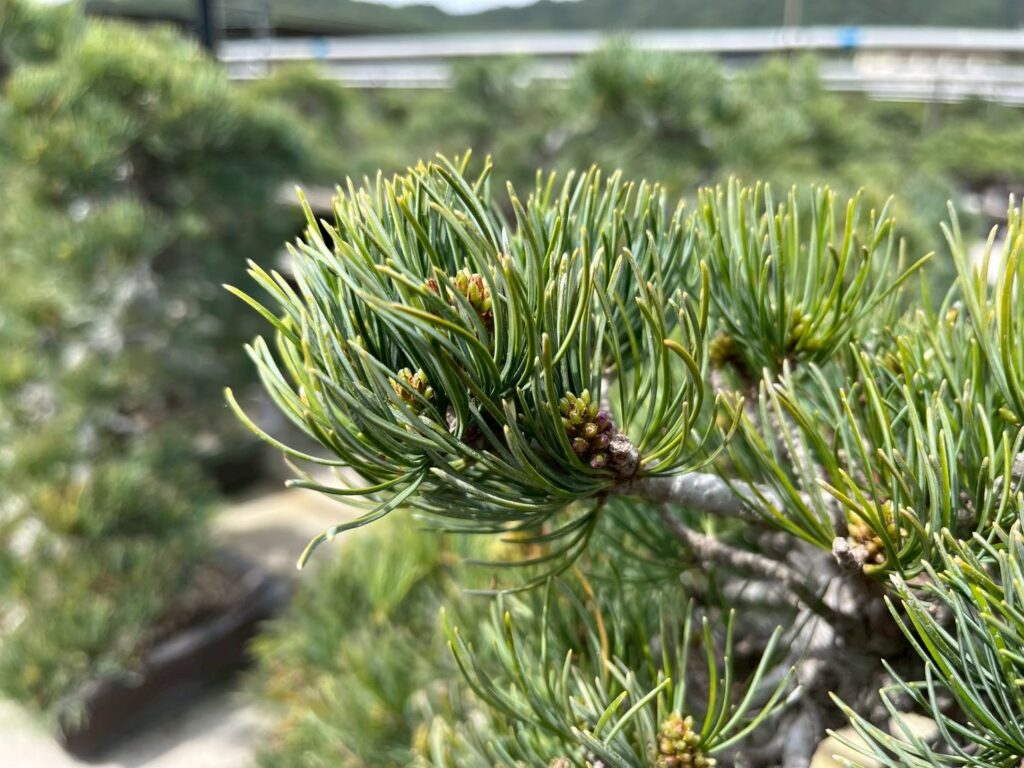
That tree is the five-needle pine, goyōmatsu (五葉松) in Japanese, known to many Western collectors as Japanese white pine. Its needles grow in bundles of five, shorter and softer-looking than those of the black pine, with a blue-green tone that many collectors love. And according to Mr. Konishi, the owner of Konishi Shorakuen, the nursery in Kinashi where I work, it is quietly becoming one of the hardest bonsai pines to find coming out of Takamatsu.
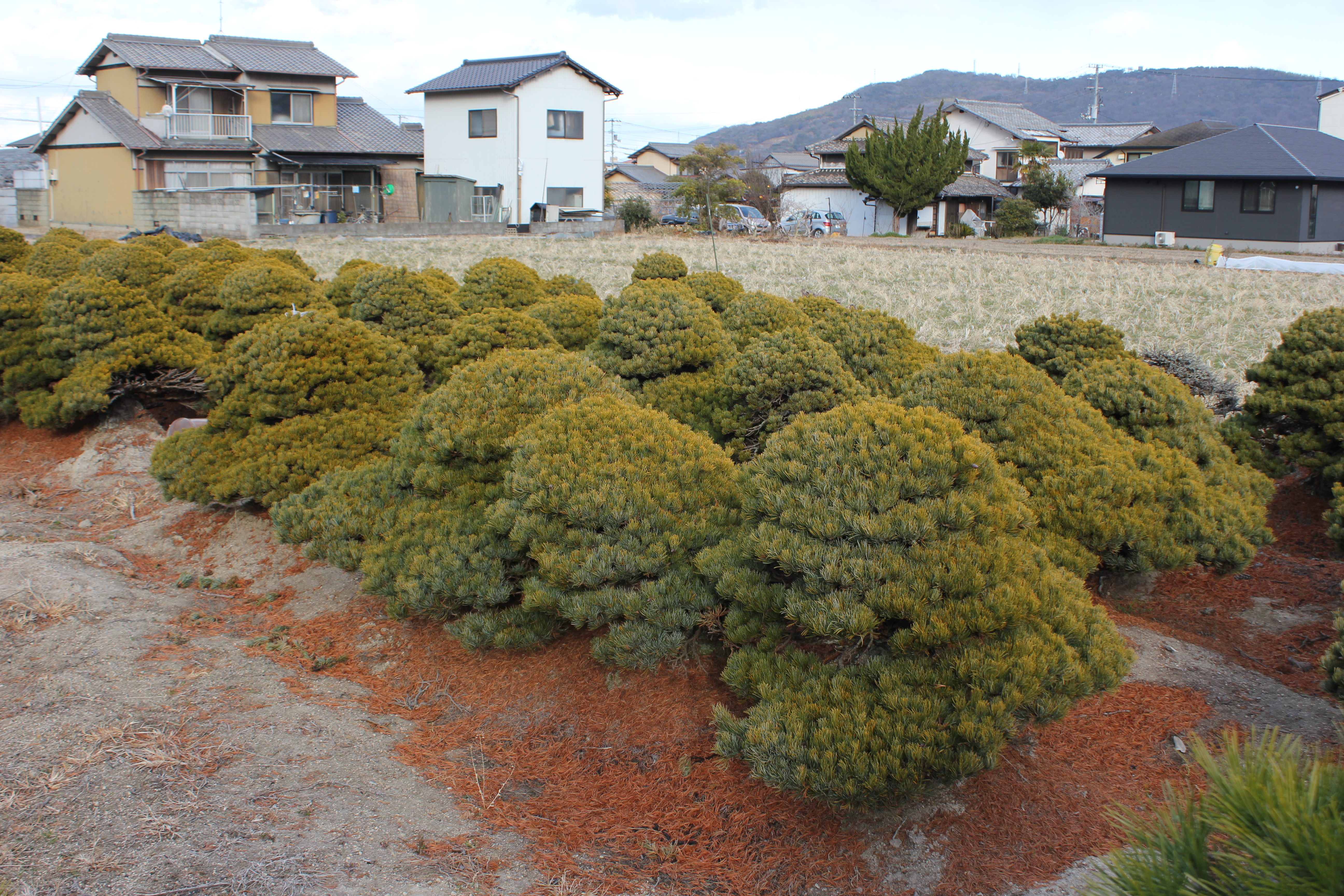
The first time Mr. Konishi brought it up, he said it almost in passing. Of the roughly sixty bonsai nurseries in Kinashi and Kokubunji combined, he told me, only three, including his own, still produce five-needle pine, grafting new trees every year. Not all of those three, he added, expect to keep going for long.
When I asked why so few, his answer was simple: it takes too much work, for too long, with too much risk.
What surprised me most was learning that a five-needle pine bonsai from this area usually doesn’t start as a five-needle pine at all. It starts as a black pine.
Here’s the process as he explained it to me:
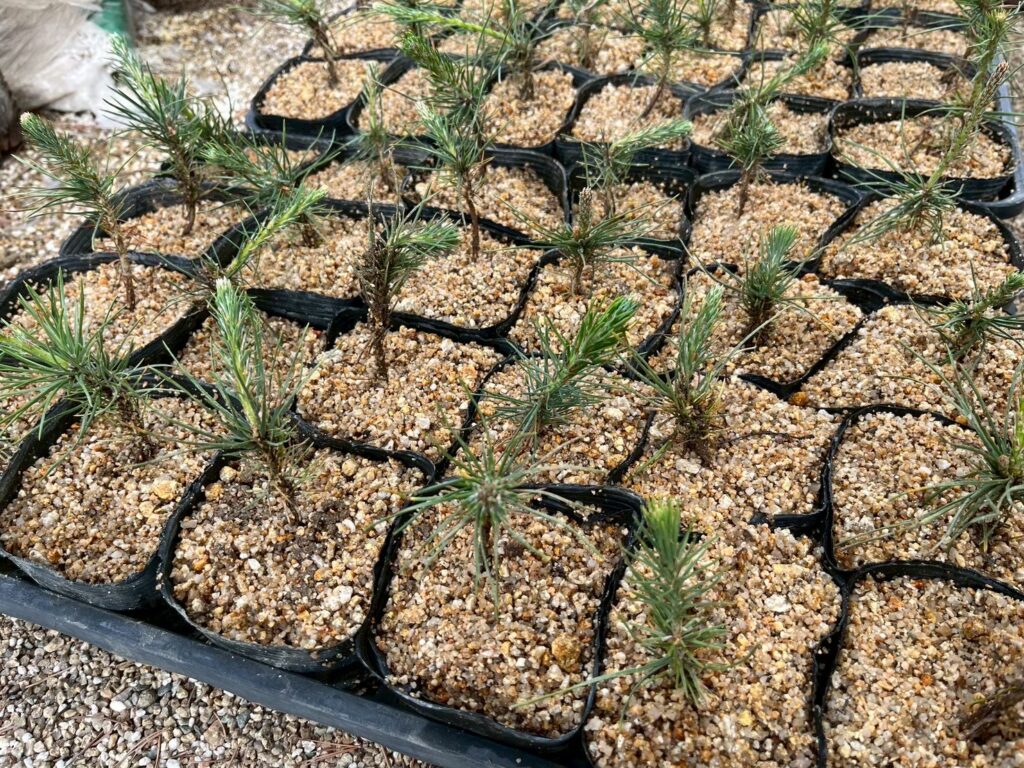
Half. That number stayed with me. Imagine raising a seedling for years, grafting it by hand, caring for it for years more, and still losing one out of every two. It goes a long way toward explaining why so few growers are willing to do it.
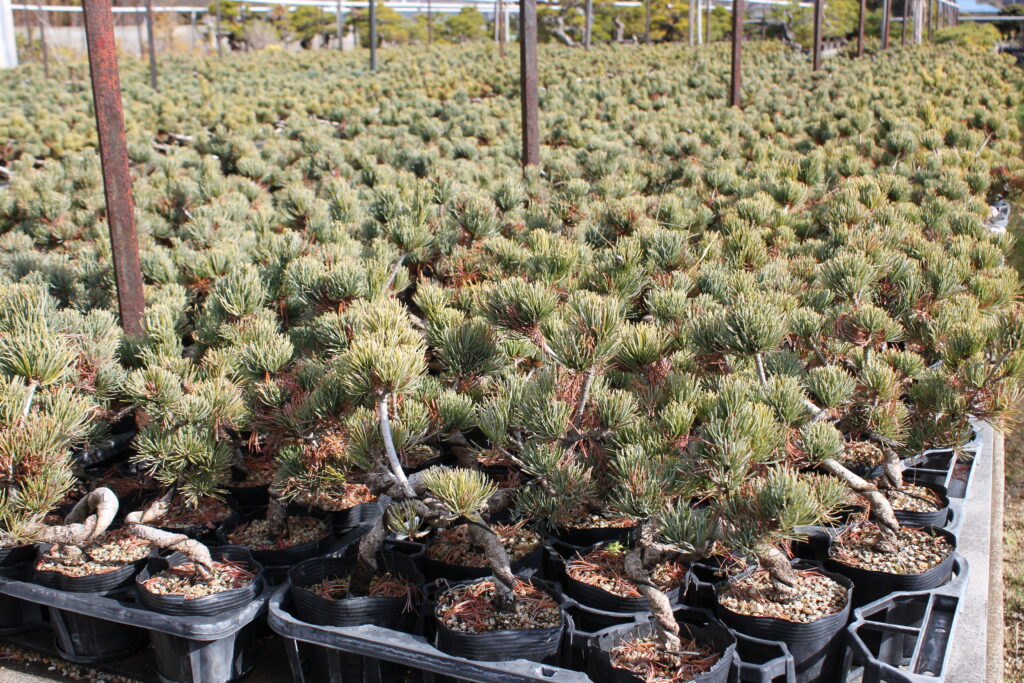
My first reaction was the same one many readers probably have: five-needle pines produce seeds, so why not just grow them from seed?
I later heard part of the answer from Mr. Kobayakawa, a grower in Kokubunji who specializes in five-needle pine and is one of the other two remaining producers in the area. He told me that growing five-needle pine from seed is extremely difficult: the seeds germinate poorly, and even the seedlings that do come up often die before they can be raised. It isn’t that five-needle pine can’t grow from seed. It’s that raising seedlings successfully is hard enough that, in practice, the growers here produce their trees by grafting.
Mr. Konishi added two more reasons grafting makes sense.
First, it’s a clone. A seedling is a genetic gamble; it may or may not resemble its parent. A grafted scion carries exactly the same genetics as the tree it was cut from. If a grower has a five-needle pine with especially good needles, color, or growth habit, grafting is how they keep those traits and pass them on to the next generation of trees.
Second, it makes use of two different species. As Mr. Konishi explained it, black pine is tough in hot conditions, while five-needle pine is suited to the cold; it grows as far north as Hokkaido. In his view, grafting allows growers to make practical use of the different characteristics of the two species: the black pine provides the roots, while the five-needle pine forms the crown.
The two parts remain genetically distinct. This is a graft, not a hybrid.
This also helps explain why five-needle pine matters so much to overseas buyers. Konishi Shorakuen exports mainly to Europe, and as a rough rule of thumb based on that experience, Mr. Konishi finds that five-needle pine is often a good fit for cooler parts of Europe, including the Netherlands and the UK, while black pine is often better suited to warmer regions such as Italy and Spain. The right choice still depends on local climate and growing conditions.
For a collector in a cooler part of Europe, then, five-needle pine may be one of the pines best suited to where they live. And if production keeps shrinking, those are the collectors likely to feel it first.
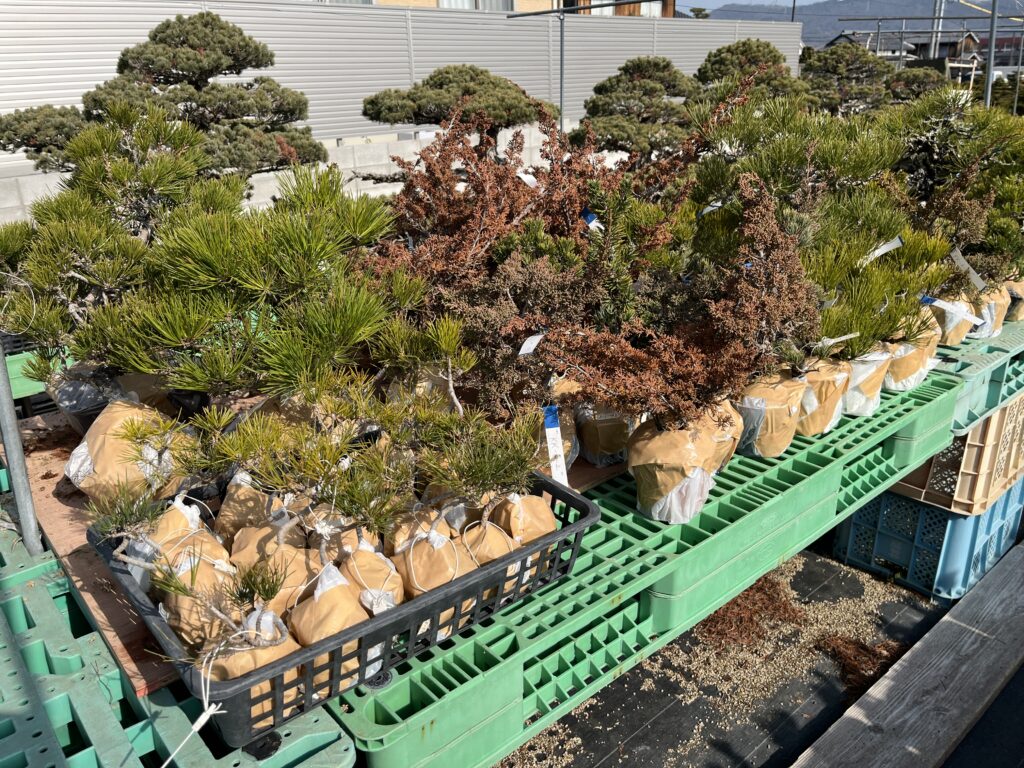
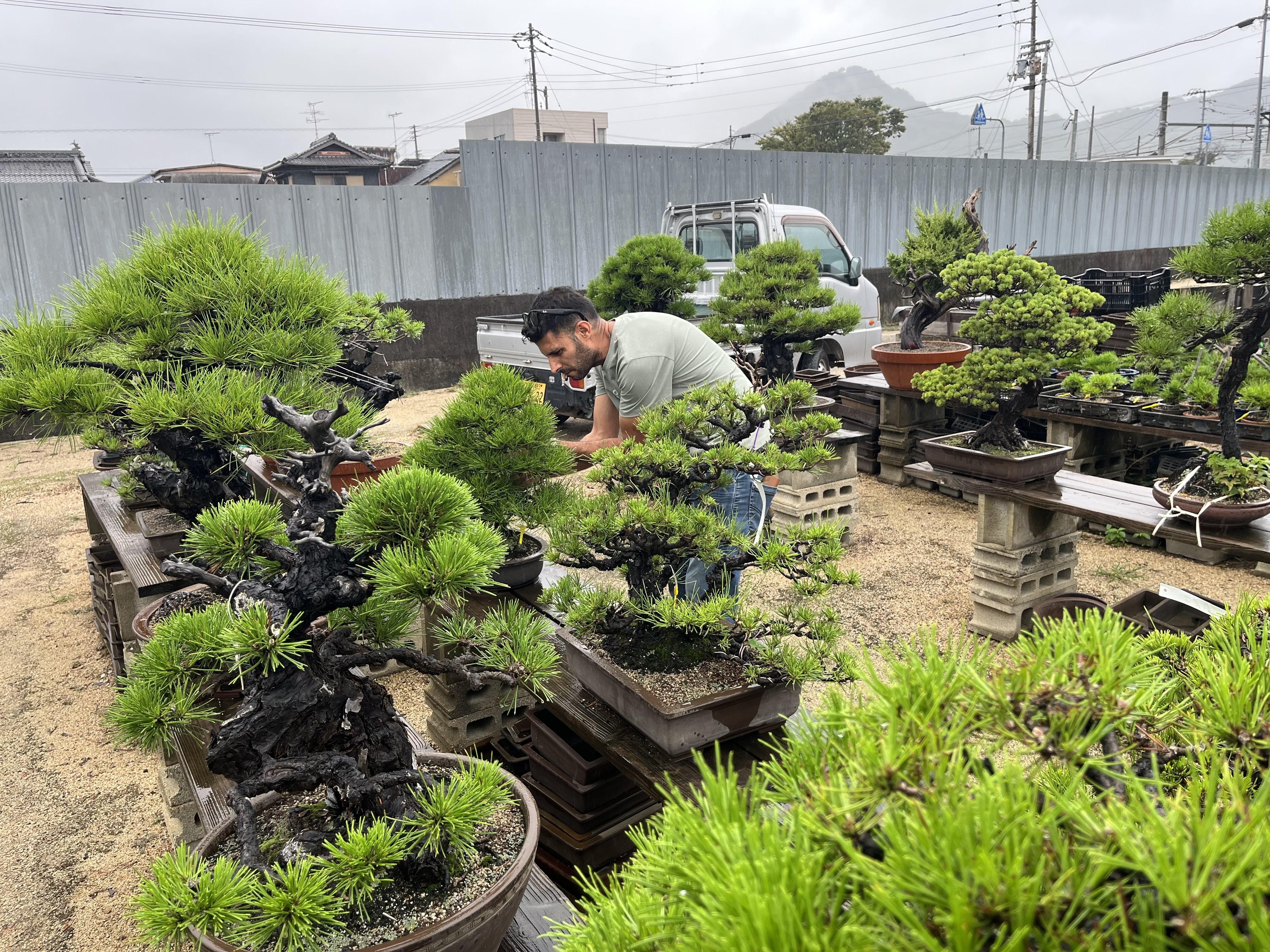
One morning at work, I helped prepare a five-needle pine over two meters tall for export to Denmark. We lifted it out of its pot, wrapped the root ball in burlap, packed water-soaked sphagnum moss around it, and wrapped the whole thing again in tarp. It was heavy, careful work, done with a crane. Garden-size trees like this aren’t bonsai, but they’re an important part of how a nursery like this keeps going.
Takamatsu isn’t the only place in Japan where five-needle pine is produced. But according to the growers I’ve spoken with, other production areas face the same problems, including a shortage of successors. Kagawa Prefecture accounts for roughly 80% of Japan’s pine bonsai production, as I explained in the first post in this series. Five-needle pine is one of the important species produced here, alongside black pine. And within the bonsai industry, Takamatsu is widely recognized as Japan’s largest production center for five-needle pine.
That’s why the growers I spoke with worry that the loss of Takamatsu’s last few producers would reach far beyond the region. In Mr. Konishi’s words, Japan could genuinely lose its five-needle pine bonsai material. I haven’t found national statistics that measure this risk. But after seeing how much time, labor, and skill go into each tree, and how few people are left doing it, I understand why they’re concerned.
Prices tell the same story. Mr. Konishi told me that years ago, young grafted five-needle pines sold for around 300 yen each, a price that, looking back, he thinks was simply too low. For decades, nobody raised it much. Today, they sell for roughly 1,000 to 1,500 yen. As supply has shrunk, buyers who once hesitated at higher prices now pay them, because once they learn the trees can’t be found elsewhere, there isn’t much choice.
Even so, the number of trees keeps falling. He pointed to a spot in the nursery where, he said, around a hundred potted five-needle pines used to stand. Now you could count them on your fingers.
One day at work, I found a pine cone on one of the five-needle pines growing in a small pot, and there were seeds inside. After everything I’d learned about how these trees are made, it felt like holding the other path: the one growers here almost never take.
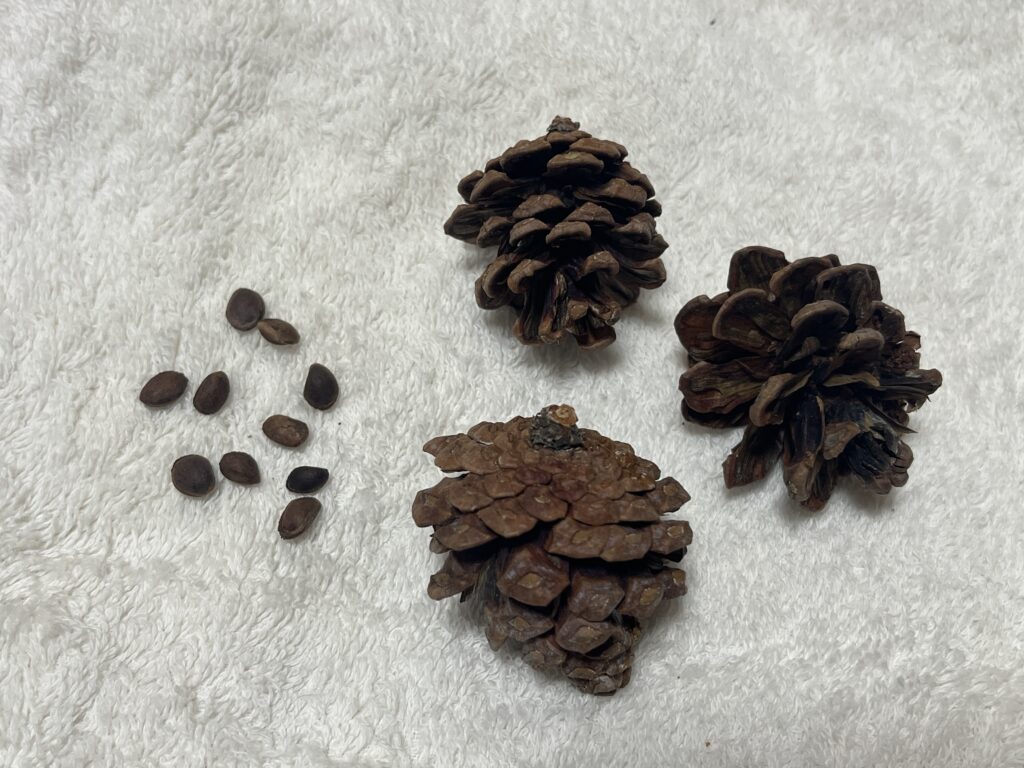
I haven’t sown the seeds yet. They’re still with me. Given what Mr. Kobayakawa told me, they may not germinate, and even if they do, the seedlings may not survive. There’s also no telling what kind of tree they would become; a seedling is a genetic gamble, which is exactly why growers graft. But it was a good reminder that even in work as slow and repetitive as this, something unexpected turns up every so often.
A finished bonsai shows you the result. A working nursery can show you the years of work behind it. In Takamatsu, you may be able to see different stages of the process, from black pine rootstock and freshly grafted trees to mature material being prepared for shipment abroad. These are working production sites rather than conventional tourist attractions, and what you can see depends on the nursery and the season. The stage a tree is at also isn’t obvious unless someone points out what to look for.
In the next post, I’ll go inside a typical working day at a Takamatsu bonsai nursery, and what the work actually looks like up close.
Source note: The production figures in this article (around sixty nurseries across Kinashi and Kokubunji, three of them still grafting five-needle pine every year, and only about half of grafted trees surviving to become sellable material), the prices of young grafted trees, and the Europe climate guideline come from conversations with Mr. Konishi of Konishi Shorakuen, shared with his permission. The difficulty of raising five-needle pine from seed comes from Mr. Kobayakawa, a five-needle pine grower in Kokubunji. These reflect the growers’ experience and knowledge of the local industry, not published statistics. The 80% figure for Kagawa’s share of national pine bonsai production comes from a JETRO case study, cited in the first post in this series, and is also given by the Kagawa Prefecture tourism site. Takamatsu City lists black pine, nishiki pine, and five-needle pine among the area’s main bonsai species. I haven’t found a published figure for five-needle pine alone; Takamatsu’s position as the largest production area for it reflects what is widely recognized within the industry.
Want to see five-needle pine being made, from graft to finished tree? I offer private bonsai experiences in Takamatsu, helping visitors arrange nursery visits and understand what they’re seeing, with explanations directly from the people who grow the trees whenever possible. [Message me on WhatsApp] to arrange a visit.